

 English

 Español
 中文简体

Content
A 500 gram punnet of blueberries has already been harvested, packed, palletised, chilled, trucked and handled on the store floor before a shopper lifts it. If the plastic food packaging container fails at any one of those points, the fruit absorbs the loss and the pack takes the blame. That is why buyers specify the container like a component instead of sourcing it like a commodity.
A converter that only turns sheet into shapes will quote on part weight and nothing else. Factories that keep food accounts quote on gauge consistency, lid fit, cold chain behaviour and paperwork. Hubei Kipoer Plastic Packaging Co., Ltd. sits in the second group: a PET and PP converter established in 2015, forming trays, clamshells, cups and lidded containers for fruit, fresh-cut produce, deli, frozen meat, dried snacks and drinks.
What a Plastic Food Packaging Container Is Actually Judged On
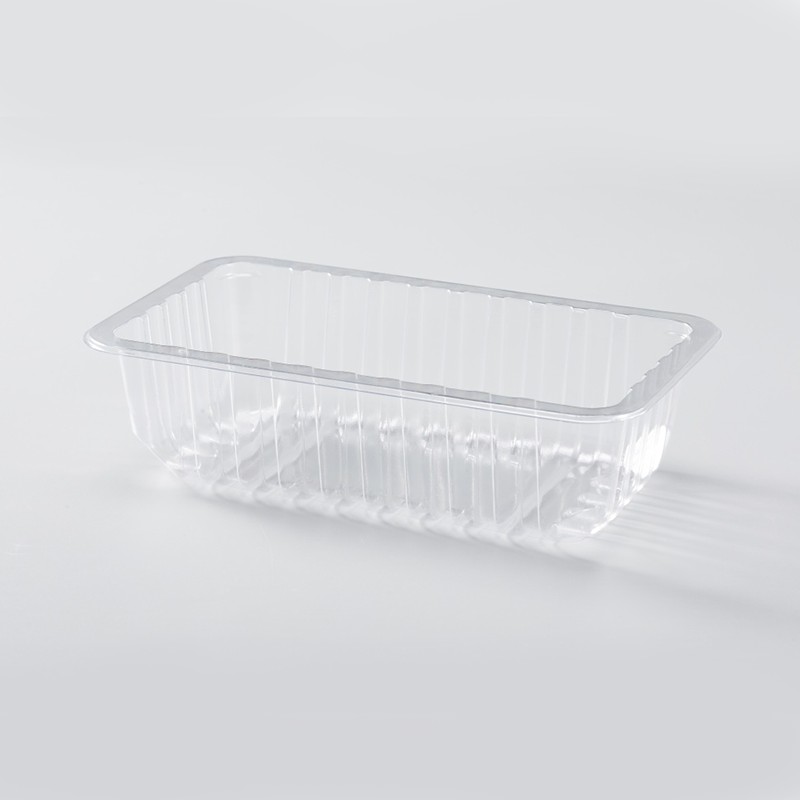
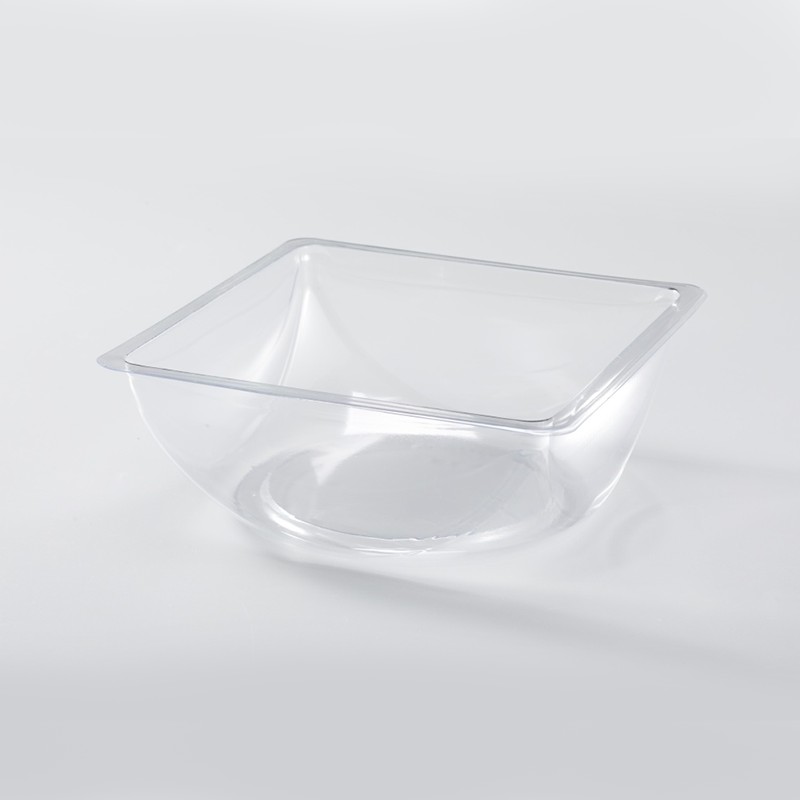
A plastic food packaging container is a formed food-contact pack, such as a clamshell, tray, cup or lidded box, and it is judged on four things at once: food-contact compliance, protection through the cold chain, shelf presentation and cost per packed unit.
Working definition: a plastic food packaging container is a rigid or semi-rigid pack thermoformed from a food-grade resin, sized to hold a specific product, vented or sealed as the product requires, and documented as safe for direct food contact.
Compliance is binary. Either there is a resin grade and a migration declaration on file, or the pack is not sellable. The other three are trade-offs, and they pull against each other on every project.
- Food-contact compliance: resin grade, migration limits, written declaration and lot traceability.
- Closure integrity: lid fit, living hinge, tamper-evident break force and leak resistance.
- Stack and top load: a filled pack stacked five high in a chilled case must not bow or pop.
- Presentation: clarity for berries, a label window for fresh-cut, colour depth for gift trays.
- Line handling: denesting, lidding speed, static behaviour and cartons per pallet.
Most complaints raised at the packing line are not about resin at all. They are about gauge: a corner that thins during forming, a base that flexes when the punnet is picked up one-handed, a lid that lifts when the pallet is wrapped too tight. A tenth of a millimetre at the corner is the difference between a firm pack and a wobbly one.
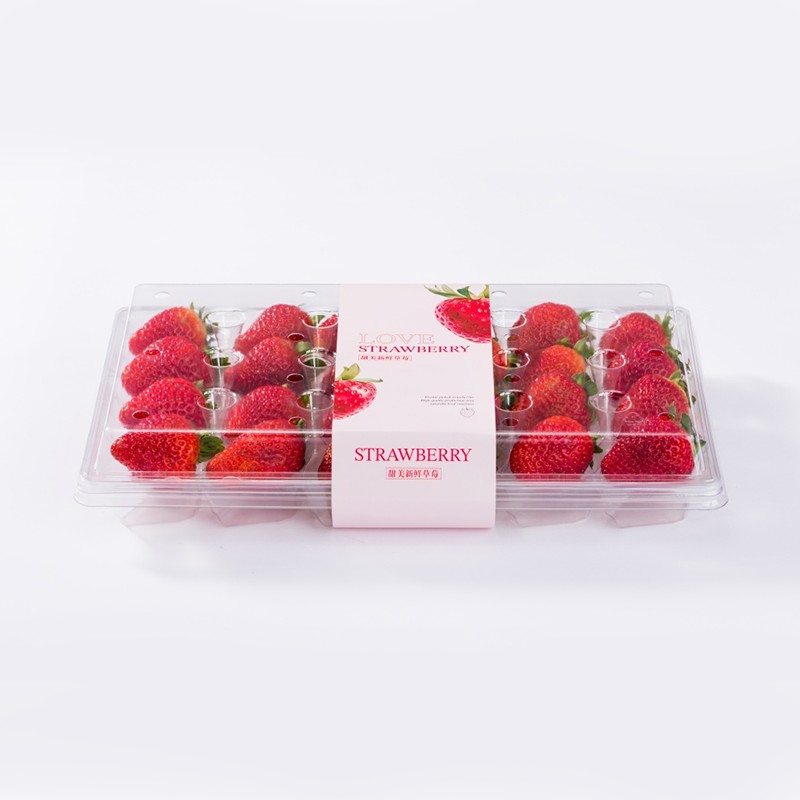
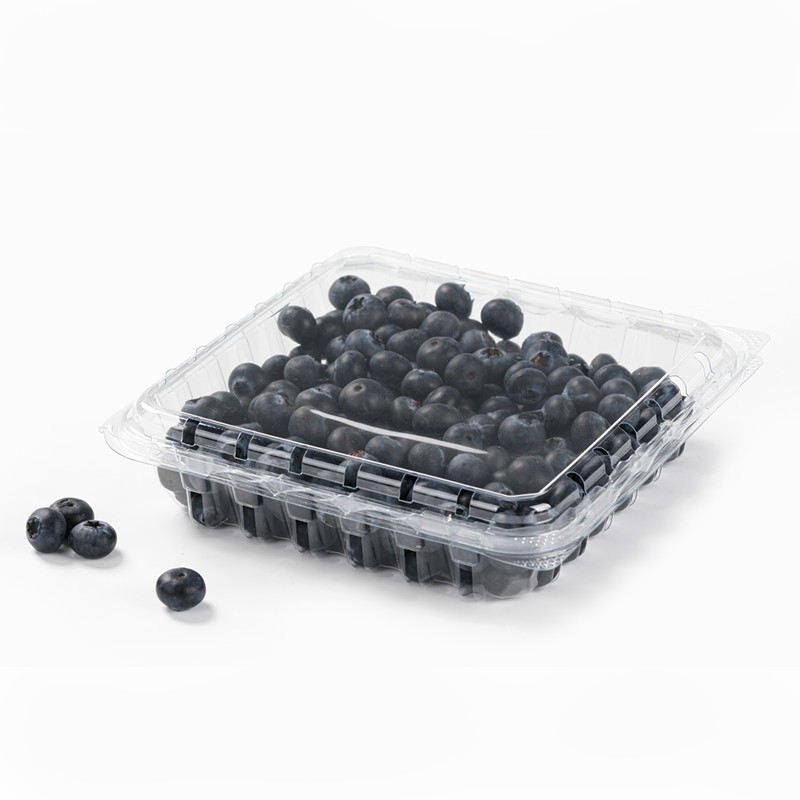 Clear PET Fruit Clamshell Containers for Fresh ProduceTransparent food-grade PET clamshells with hinged lids and ventilation options, offering clarity and stiffness for berries, fruit, salads, and retail packs.View Product →
PET, PP and PETG: Which Resin Fits the Job
PET gives clarity and stiffness, PP gives temperature range, and PETG gives a wide, flat flange that seals and peels cleanly on a heat-seal line.
| Resin | Best fit | Main strength | Watch-out |
| PET | Berry clamshells, fruit trays, cups, dome lids | High clarity, stiffness, good print surface, established recycling stream | Softens above 60 C, so living hinges need careful profile design |
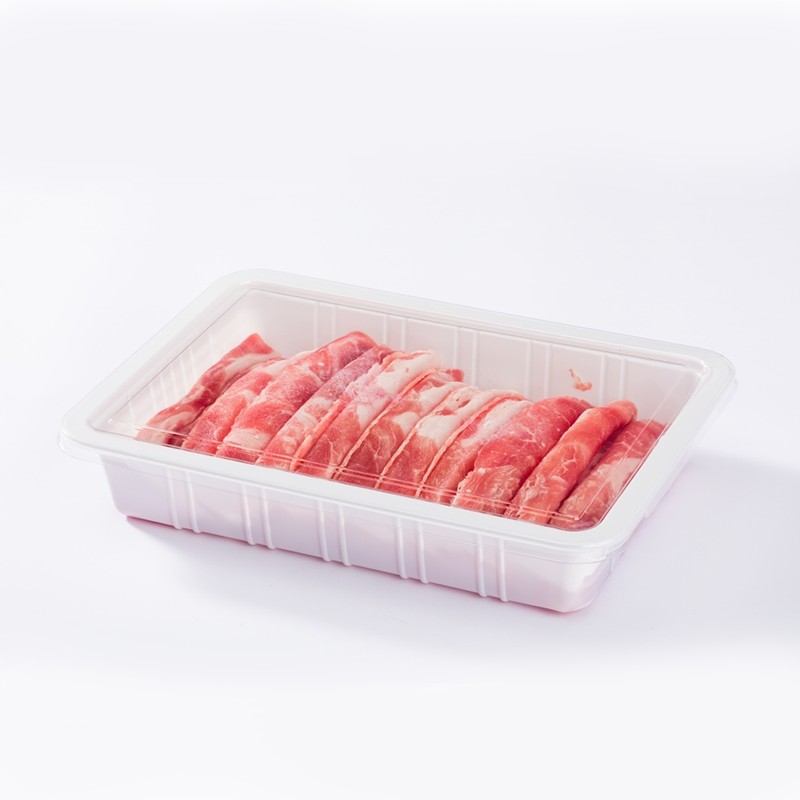
| PP | Deli trays, frozen meat trays, vented lids, hot fill | Wide temperature range, toughness, antifog grades | Lower clarity than PET, colour matching on black and white takes control |
| PETG | Heat-seal and modified-atmosphere containers, thick flanges | Reliable seal peel, deep draw, low warp on rectangular parts | Higher resin cost and a separate recycling route |
Clear PET dominates berries, cherry tomatoes, fresh-cut fruit and drink cups because shoppers buy with their eyes. PP takes over wherever temperature decides the result: deli counters, frozen meat, vented hot-drink lids. PETG appears where a film has to be sealed and then peeled without tearing the flange. Sealing is where most format mistakes surface, and the criteria we check before a tool is cut are set out in this guide to PETG heat-seal food container selection.
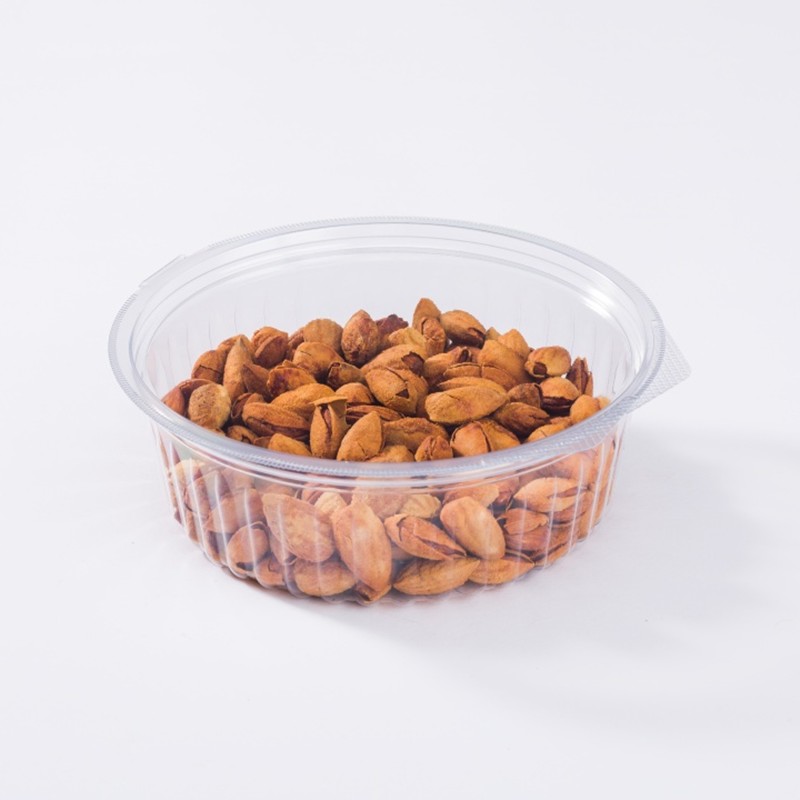 XGL-2213H6 PETG Heat-Seal Rectangular Auto-Stack Food ContainerReinforced PETG container with corner stacking guides and strong foil seal for fresh-cut fruit, salads, meals, and automated destacking.View Product →
Matching Container Format to the Food
Format follows the filling line and the retail case, never the other way around. A mould chosen for looks usually costs a season of manual rework.
Berries and whole fruit
Vented clamshells with a defined hinge and a tamper-evident lock. Vent area, drain holes and punnet height are set by the fruit, not by the tool.
Fresh-cut, deli and frozen
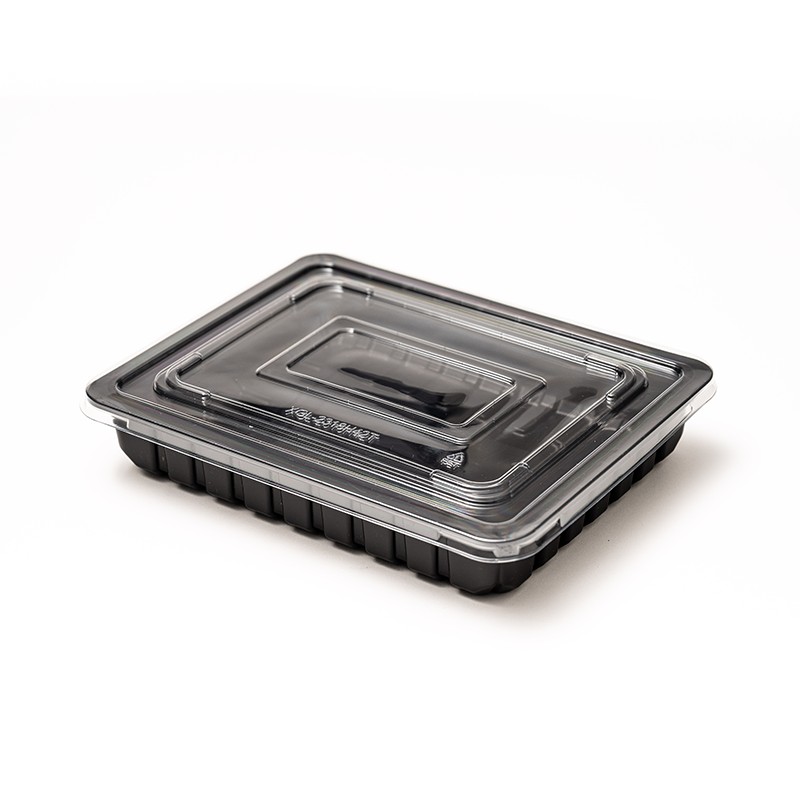
Multi-compartment round and square containers, black PP bases with clear lids, and antifog grades wherever a chilled case fogs the window.
Cups, domes and lids
24 to 32 oz cups with 98 mm or 117 mm lid diameters, flat or dome, vented or straw-slot. Lid diameter compatibility is the first thing to confirm.
Vent or seal is a decision, not a default. Blueberries want airflow and a pack that does not sweat. Fresh-cut fruit wants a closed, tamper-evident container with a label window. A hot drink wants a vented lid that releases steam without lifting off the rim.
Compartment count is a merchandising choice as much as a packaging one. Three-compartment round containers push portioned fruit and salad toward a higher ticket, while a single-compartment tray keeps the fill weight honest and the pack easy to load.
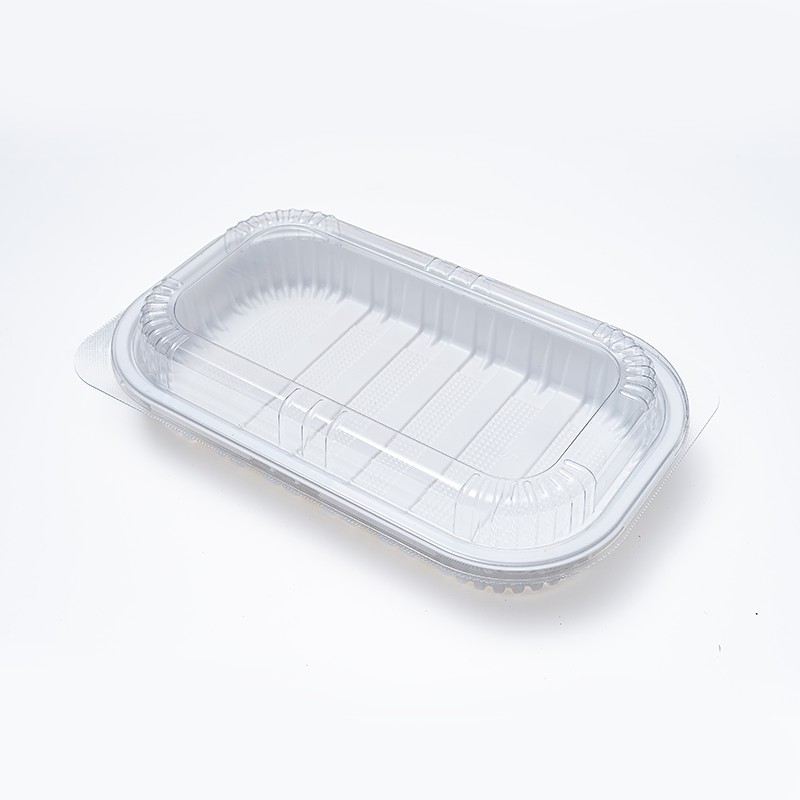
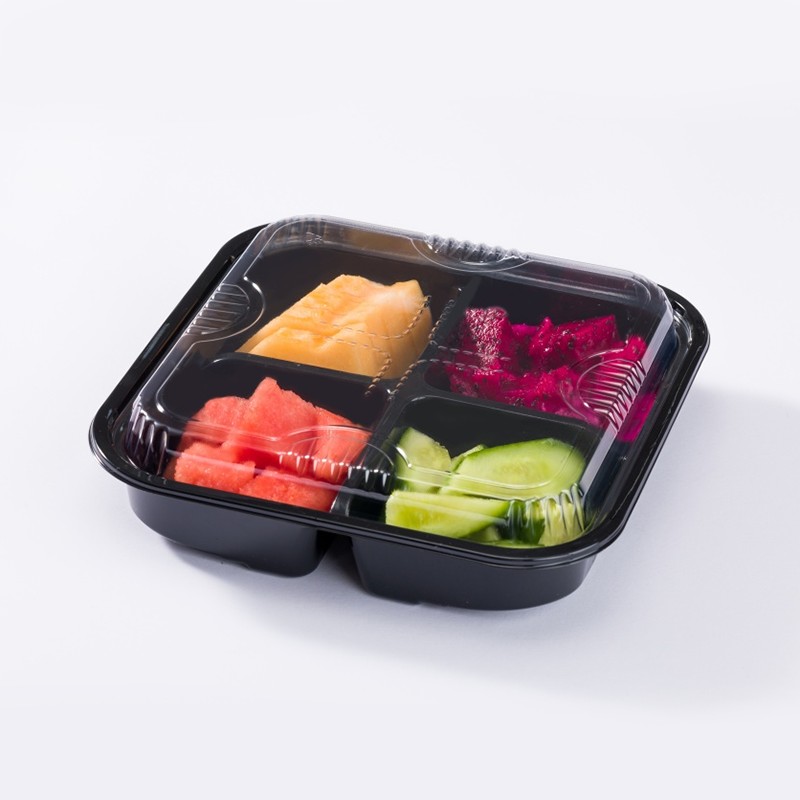 XGL-315 Anti-Fog Deli Tray with Clear LidBlack PP base and anti-fog PET lid create a leak-proof deli tray for refrigerated display, takeout, and microwave reheating.View Product →
Sample Approval Checks That Catch Real Problems
Approve a sample against measurements, not against a photograph. Six checks cover almost every failure we have seen reach a production line.
- Gauge across the part, not just at the base. Measure corners, side walls and the hinge in three places each and record the spread.
- Lid fit under load. Fill to the declared weight, stack five high, hold at 4 C for 72 hours, then check for pop-off and base deformation.
- Hinge fatigue. Open and close the pack 20 times at chilled temperature. A living hinge that whitens is already on its way out.
- Tamper-evident break force. It should resist a casual lift and still open without a tool or a torn flange.
- Vent placement against product contact. Holes sitting under the fruit block airflow; holes sitting above it do the job.
- Documentation. Resin grade, food-contact declaration, migration test summary and lot traceability in hand before the first pallet ships.
Cost, Freight and Supply Risk
Unit price is set by four things: resin grade, part weight, tooling amortisation and how much air you ship inside the carton.
Pushes the unit price up
- Heavier gauge than the stack actually needs
- Low nesting ratio, so pallets carry air
- Small runs with frequent colour changes
- Over-specified tamper evidence on a low-risk product
Pulls the landed cost down
- Wall thickness tuned to the real top load
- Higher nest ratio and more packs per carton
- Shared lid diameters across a product family
- Tooling amortised over a family, not a single part
The quieter risk sits in tooling. A single-cavity mould tied to one supplier, a colour that drifts between runs, or a resin substitution made without notice can cost more than a price increase. Ask who owns the tool, how colour is matched from batch to batch, and what happens if the grade changes.
Frequently Asked Questions
Are plastic food packaging containers recyclable?
PET clamshells and cups join the same rigid plastics stream as bottles in many markets, and PP trays are collected wherever rigid plastics are sorted. Real recyclability depends far more on local collection than on the pack itself, so ask for the resin code and keep designs mono-material where the product allows it.
What is the difference between a clamshell and a lidded container?
A clamshell is formed as one piece with a living hinge, so base and lid share the same sheet and the same resin. A lidded container uses two parts, typically a PP base with a clear PET lid, which lets the body take the temperature and the lid take the display job.
Which plastic suits frozen food packaging?
PP is the usual answer for frozen meat and ready meals because it stays tough at minus 18 C and copes with the condensation of a cold case. Antifog grades matter here: a lid that fogs hides the product and shortens shelf appeal even when the pack itself is sound.
What documentation should a supplier provide?
At minimum a food-contact declaration covering the resin and the finished part, a migration test summary, resin grade identification and lot traceability. A certificate that only names the raw material is not enough once the pack is formed and printed in-house.