


 English

 Español
 中文简体
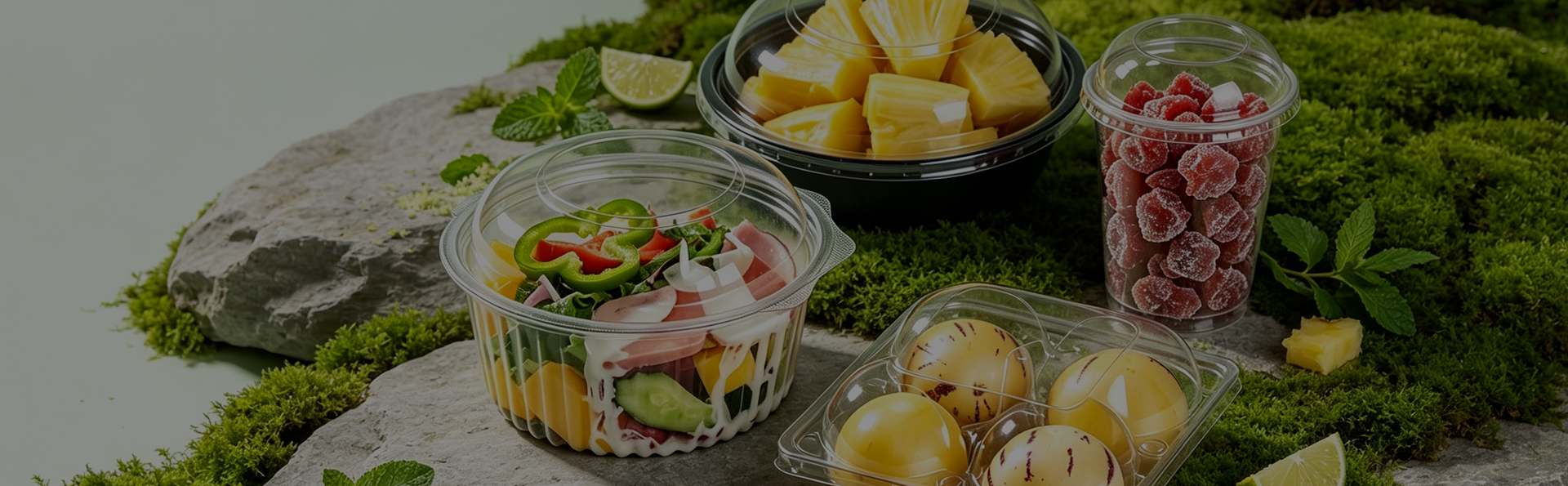


PET Round Salad Clamshell Containers from Hubei Kipoer
As a PET Round Salad Container Manufacturers, we match product configuration to the application, operating limits, interfaces and acceptance criteria defined for each project.
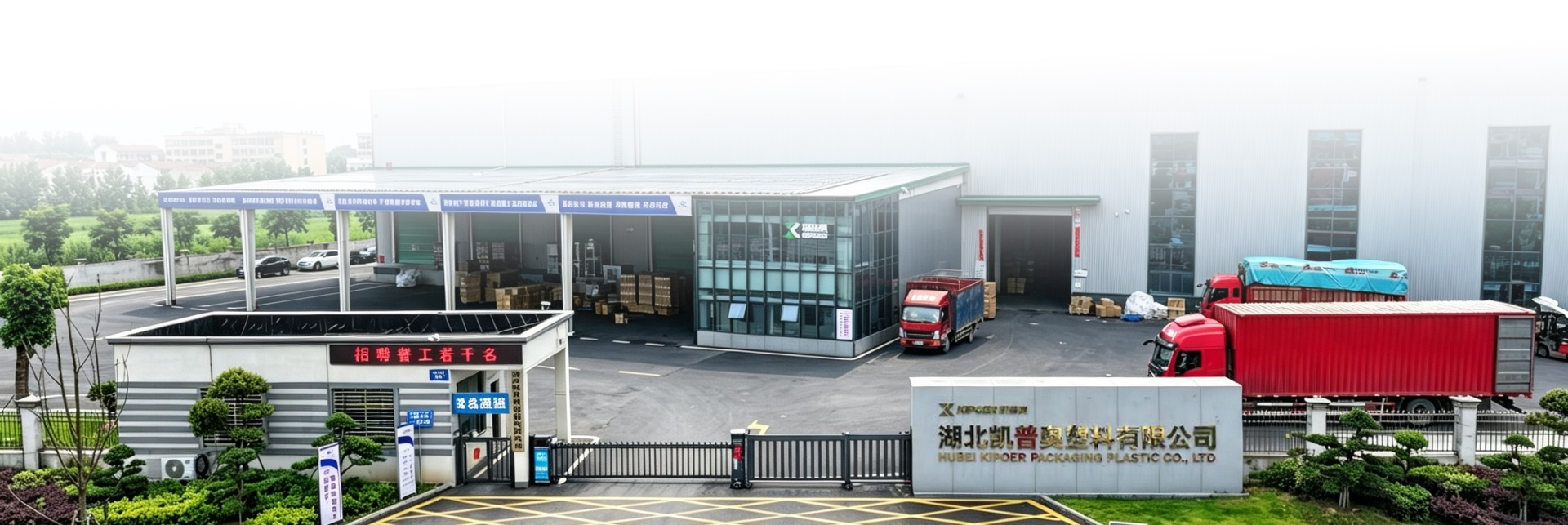
Hubei Kipoer Plastic Packaging Co., Ltd. is a PET and PP deep-processing and thermoforming manufacturer based in Xiaogan, Hubei Province, founded in August 2015 with a total investment of USD 30 million. We extrude our own PET sheet and form it into finished food packaging in the same facility, which keeps material grade, wall thickness and forming behaviour under one production team. Our round salad clamshell family is built for supermarkets, central kitchens, light-meal delivery kitchens and convenience-store ready-to-eat programmes that need a wide, clear, leak-resistant round pack.
The range is part of our broader Clear PET Fruit Clamshell Container family, which also covers berry, square, irregular, sealed and tamper-evident formats. Round geometry is the format we recommend when the filling is bulky, loosely packed or irregular in shape.
Our Round Salad Clamshell Range
Two production-ready round formats anchor the range, and both can be adapted in tooling, thickness and closure detail for a specific salad programme.
| Format | Construction | Typical Contents | Application Fit |
|---|---|---|---|
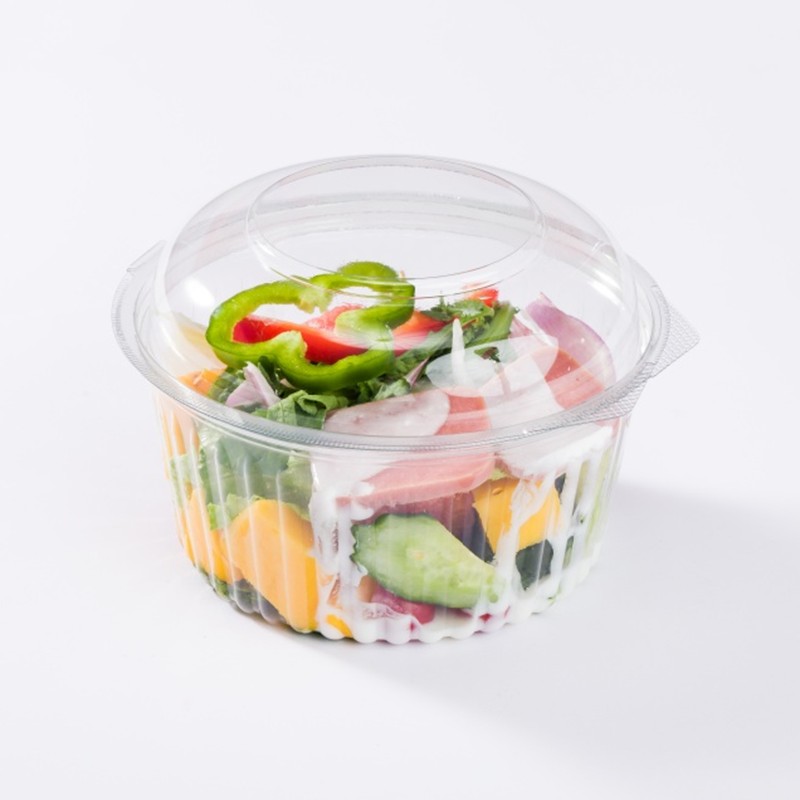
| XGL-48DL PET Salad Comfortable Touch Round Clamshell Delivery Container | Round one-piece flip-top with a comfortable-touch rim | Composed salads, grain bowls, mixed fruit | Delivery and takeaway salad programmes where the pack is handled repeatedly |
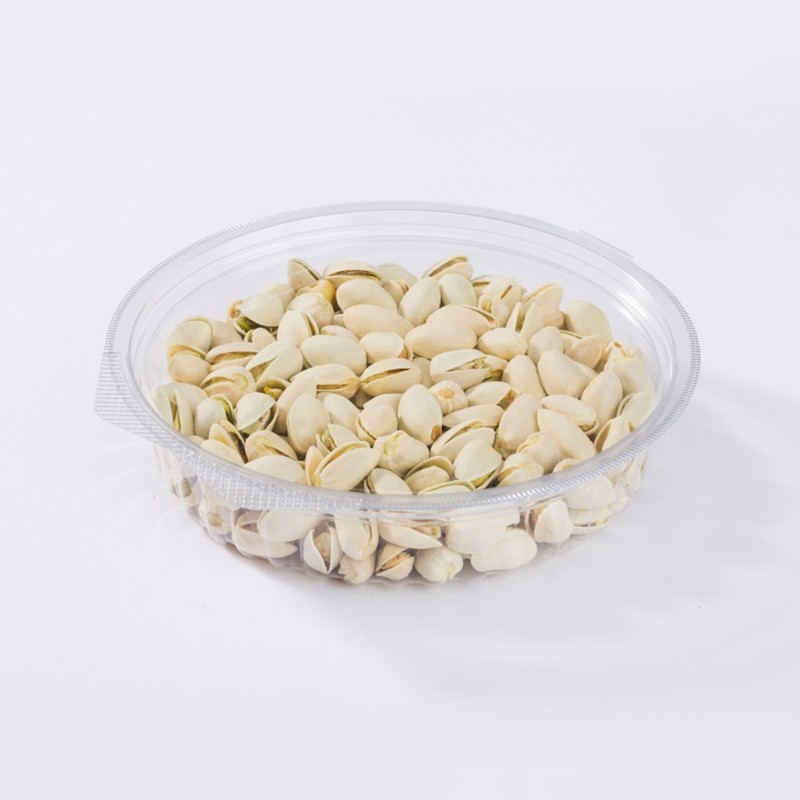
| XGL-20DL PET Anti-slip Clamshell Portable Round Container | Round flip-top with a flat anti-slip base | Side salads, fruit cups, single-portion mixes | Grab-and-go retail and convenience-store chiller shelves |
| Custom round salad clamshell | Tooled to customer diameter, depth and closure | Brand-specific salad and vegetable mixes | Private-label lines, fixed fill weights, automated lidding |
Why Round Geometry Suits Salad Filling
A round opening is wider across the working area than a square pack of comparable footprint, so operators fill and customers retrieve contents with less spillage. That matters for fluffy, irregularly shaped salads, fruit salads and mixed vegetables that do not settle into corners. The smooth rounded profile also reads as a premium presentation once combined with transparent PET, which supports shelf appeal for branded salad lines.
- Wide access: easier manual or semi-automatic filling of loose, high-volume salads.
- Dressing retention: the closed rim and continuous hinge help contain dressings and fruit juices during transport.
- Retrieval: no corner traps, so the full portion is reachable with a fork.
- Merchandising: 360-degree product visibility from any shelf angle.
Material and Construction
Round Salad Container are formed from food-contact PET sheet produced on our own extrusion lines, giving high clarity, good rigidity at thin walls and reliable hinge memory. The one-piece flip-top design removes a separate lid from the packing line, which simplifies handling and reduces component count. Where a programme needs different surface behaviour, we adjust the sheet rather than the tooling.
- Anti-fog treatment for chilled display where condensation would obscure contents.
- Anti-static treatment for lines handling dry or lightweight items.
- Colour matching and tinting for brand differentiation.
- Laminating and surface finish adjustments.
- Wall thickness tuned to fill weight, stacking load and closure force.
Specifications We Confirm Before Tooling
Round salad packaging is defined by a small set of variables that interact: diameter, depth, wall thickness and closure geometry. Changing one affects fill volume, stacking strength and lid retention, so we confirm the working point before cutting a mould.
| Parameter | What We Set | Effect on the Pack |
|---|---|---|
| Outer diameter and depth | Matched to target fill weight and tray footprint | Usable volume, shelf density, case count |
| Wall thickness | Selected against load and closure force | Rigidity, clarity, material cost per unit |
| Closure and hinge | Snap fit, rim profile, hinge position | Sealing against dressings, re-close behaviour |
| Stacking and nesting | Base and shoulder geometry | Pallet stability, chilled-cabinet loading |
| Sheet grade and finish | Food-contact PET, anti-fog, colour | Display clarity, condensation control, branding |
Capacity, Tooling and Quality Control
Our production base runs 16 fully automatic high-speed vacuum forming lines with in-house mould processing equipment and a Class 100,000 food dust-free clean workshop across a 50,000 m² site. Annual vacuum forming capacity exceeds 30,000 tons, with monthly output around 2,000 tons, which allows both small trial batches and long-run seasonal programmes to be scheduled without displacing each other. More than 400 employees support the operation, including packaging structure R&D engineers and dedicated mould-making and quality-control technicians.
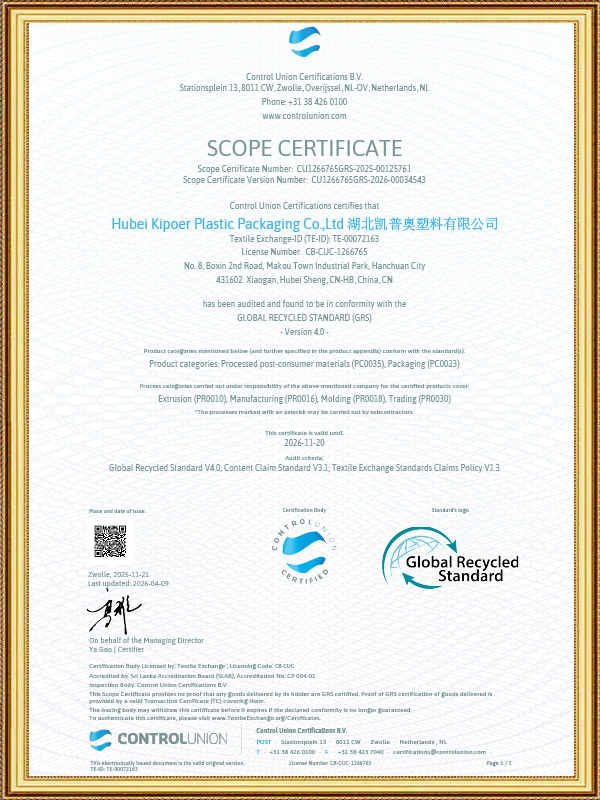
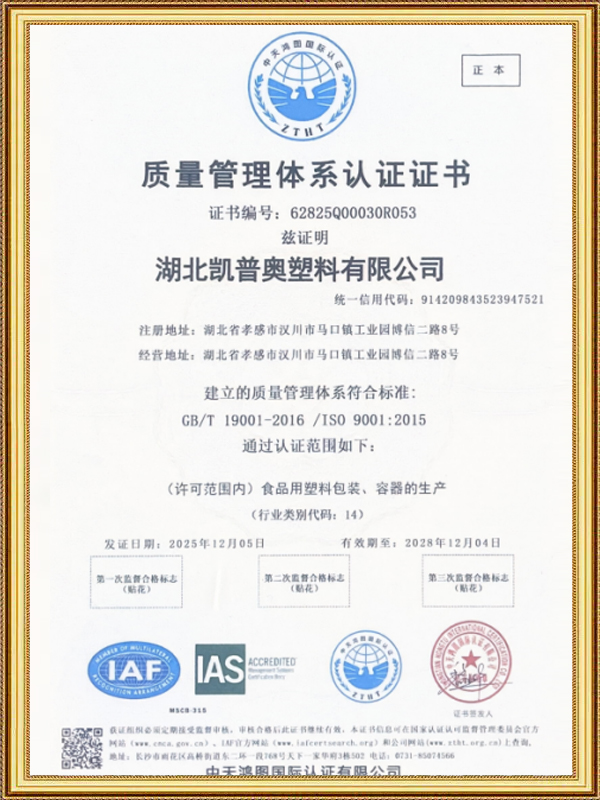
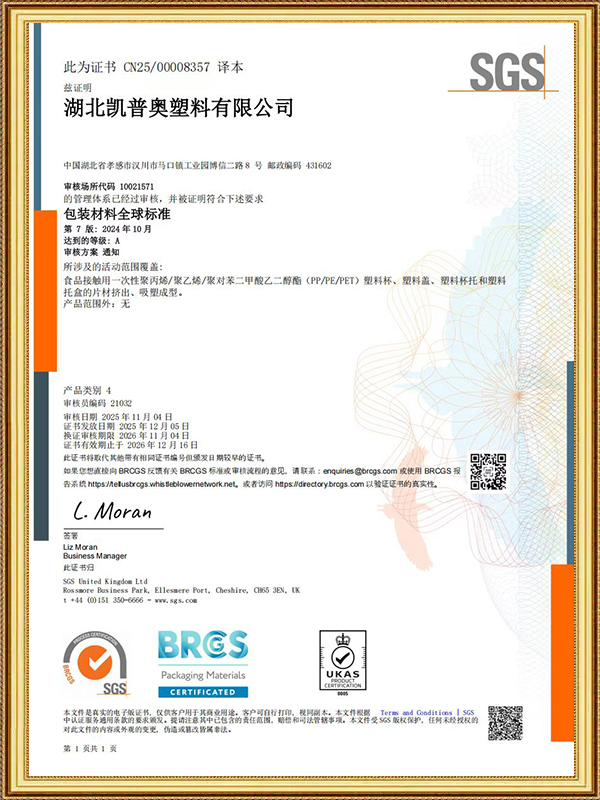
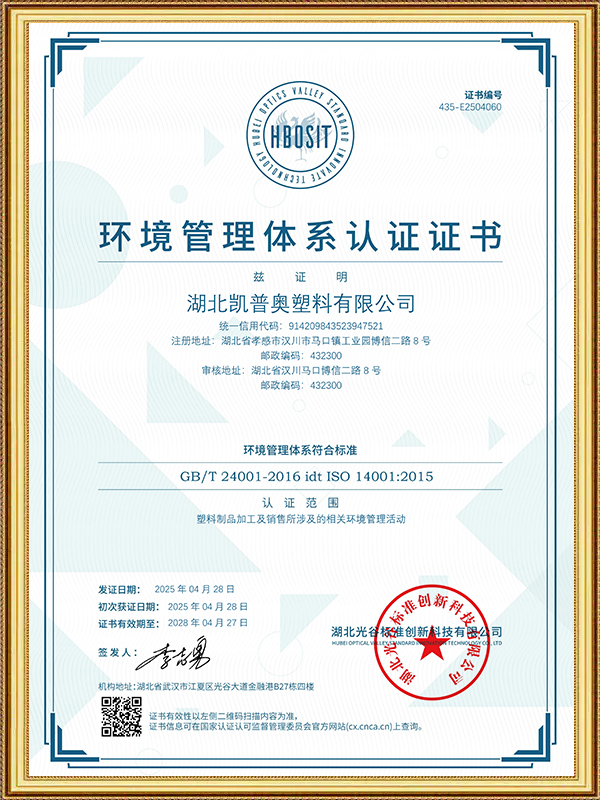
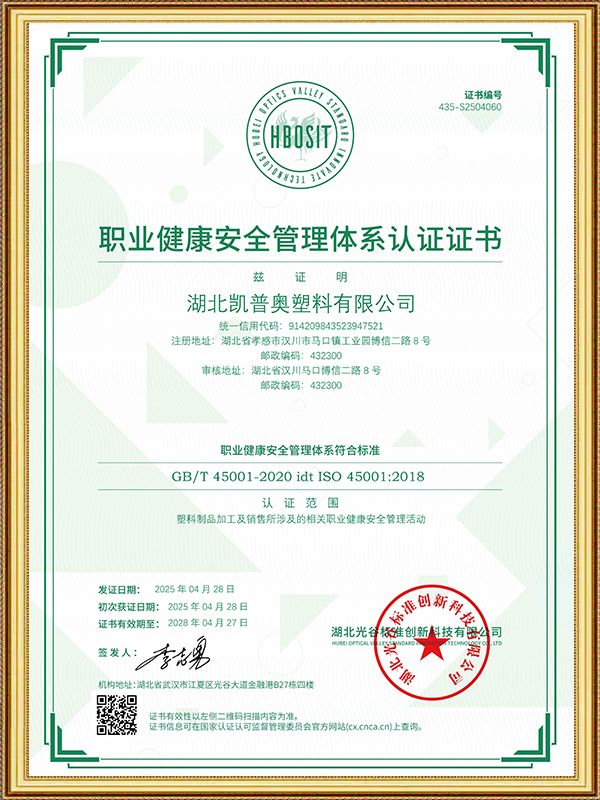
Quality control follows a system established in accordance with ISO standards. Raw material is checked for food-contact compliance before warehousing, production runs in a dust-free controlled environment with in-line inspection at each process step, and finished goods are sampled for dimensions, sealing, temperature resistance and odour. Our testing laboratory is equipped with temperature-resistance chambers, sealing testers, thickness testers and food-material safety testing equipment, and third-party food contact testing reports are issued for the products we supply.
Customisation, Sampling and Delivery Scope
Customisation is our core business. We build moulds independently from customer samples, product drawings or stated size requirements, and we support process adjustments covering appearance, thickness, colour matching, anti-fog, anti-static and laminating. Universal stock formats are also available for programmes that need small quantities shipped directly.
- Mould development from physical sample, drawing or dimensional brief.
- Trial samples for fit, fill and closure verification before mass production.
- Small-batch trial orders and large-batch long-term supply on the same tooling.
- Carton and pallet configuration agreed against the customer's case pack and warehouse handling.
- Documentation and product data supplied with the shipment for incoming inspection.
Information We Use to Configure Your Solution
A quotation is only useful when it reflects the real working point. These are the inputs our team needs to select a mould, sheet grade and pack configuration for a round salad clamshell programme.
- Target fill weight or usable volume, and the salad type or mix composition.
- Preferred outer diameter, depth and any tray or crate the pack must fit.
- Closure requirement: standard snap fit, tamper-evident feature or sealed format.
- Display conditions: chilled cabinet, ambient shelf, delivery bag, or a combination.
- Filling method — manual, semi-automatic or automated line — and expected throughput.
- Branding requirements: colour, tint, printed sleeve or label area.
- Annual volume, order pattern and peak-season scheduling window.
- Destination market and the food-contact documentation required for that market.
Send these details and our team responds with a configuration proposal and quotation, typically within 12 hours on working days. As a PET Round Salad Clamshells manufacturer in China, we supply food brands, supermarket chains, central kitchens and OEM customers across more than 30 countries.
Round PET Salad Clamshell Container — Frequently Asked Questions
What round salad clamshell formats does Kipoer manufacture?
We produce the XGL-48DL comfortable-touch round clamshell delivery container and the XGL-20DL anti-slip portable round container as standard formats, plus custom round clamshells tooled to customer dimensions. All are one-piece flip-top designs formed from food-contact PET sheet.
Can you produce a round salad clamshell to our own dimensions?
Yes. We develop moulds independently from physical samples, drawings or stated size requirements, and we adjust appearance, thickness, colour and surface treatment as part of the same project. Trial samples are produced so that fill, closure and stacking behaviour can be verified before mass production.
Which material is used, and how is food-contact compliance handled?
Round salad clamshells are formed from food-grade PET sheet produced on our own extrusion lines. Raw material is verified for food-contact compliance before warehousing, production runs in a Class 100,000 dust-free workshop, and third-party food contact testing reports are issued for supplied products.
How do you control leakage with dressing-heavy salads?
Closure performance is set at the tooling stage through rim profile, hinge position and snap-fit geometry, with wall thickness tuned to the required closing force. Finished containers are sampled for sealing performance in our laboratory before shipment.
What capacity is available for peak salad season?
Sixteen fully automatic high-speed vacuum forming lines give annual forming capacity above 30,000 tons and monthly output of roughly 2,000 tons. This structure supports small trial orders and large long-term programmes in parallel, with surplus capacity available for seasonal peaks.
What do you need from us to prepare a quotation?
Fill weight or volume, salad type, target diameter and depth, closure requirement, display conditions, filling method, branding needs, annual volume and destination market. With those inputs we can propose a mould, sheet grade and pack configuration and return a quotation, usually within 12 hours on working days.