


 English

 Español
 中文简体

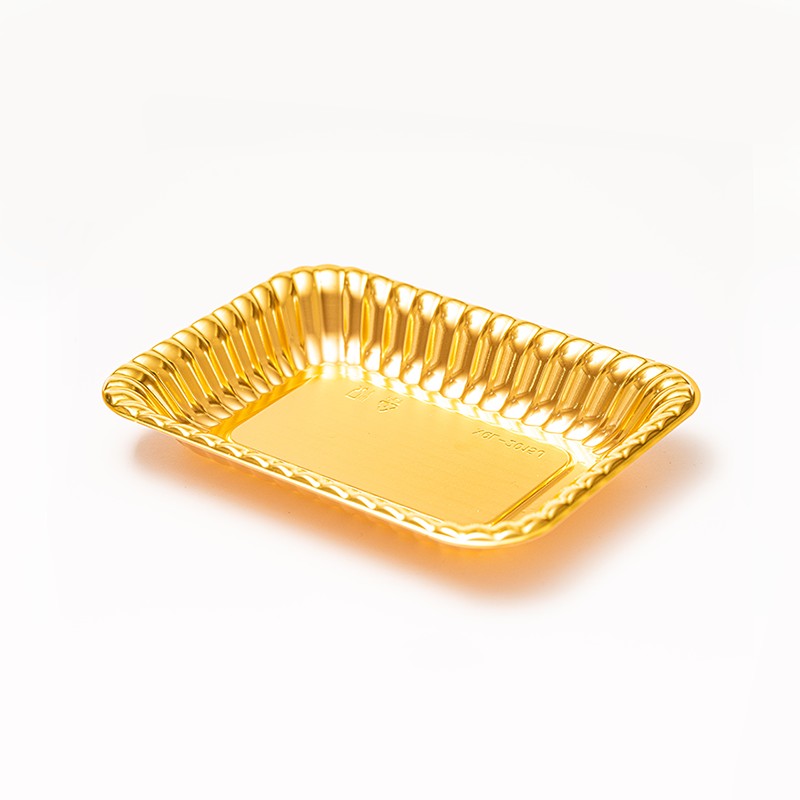
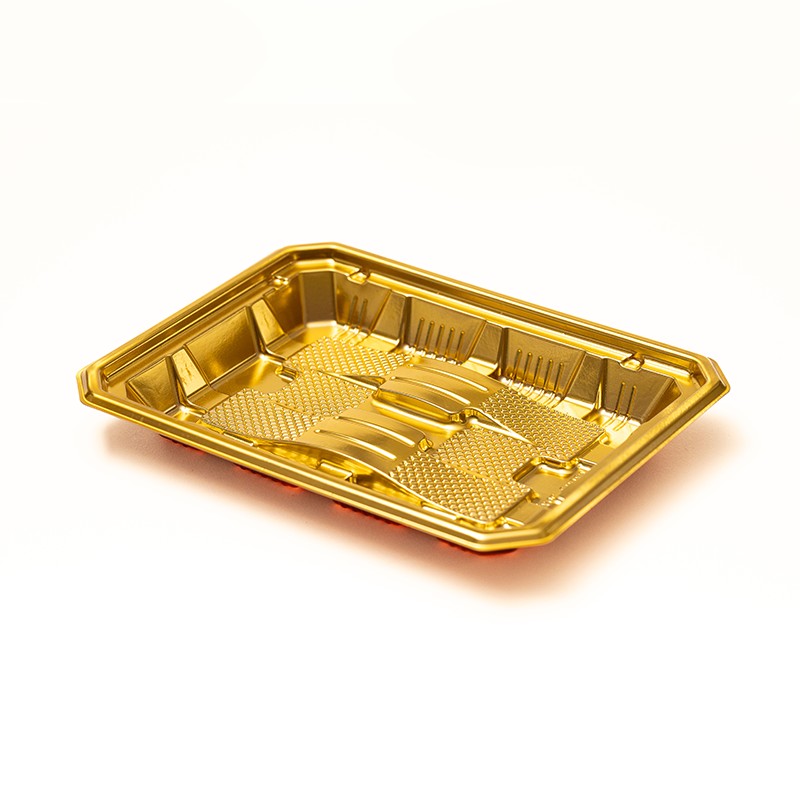

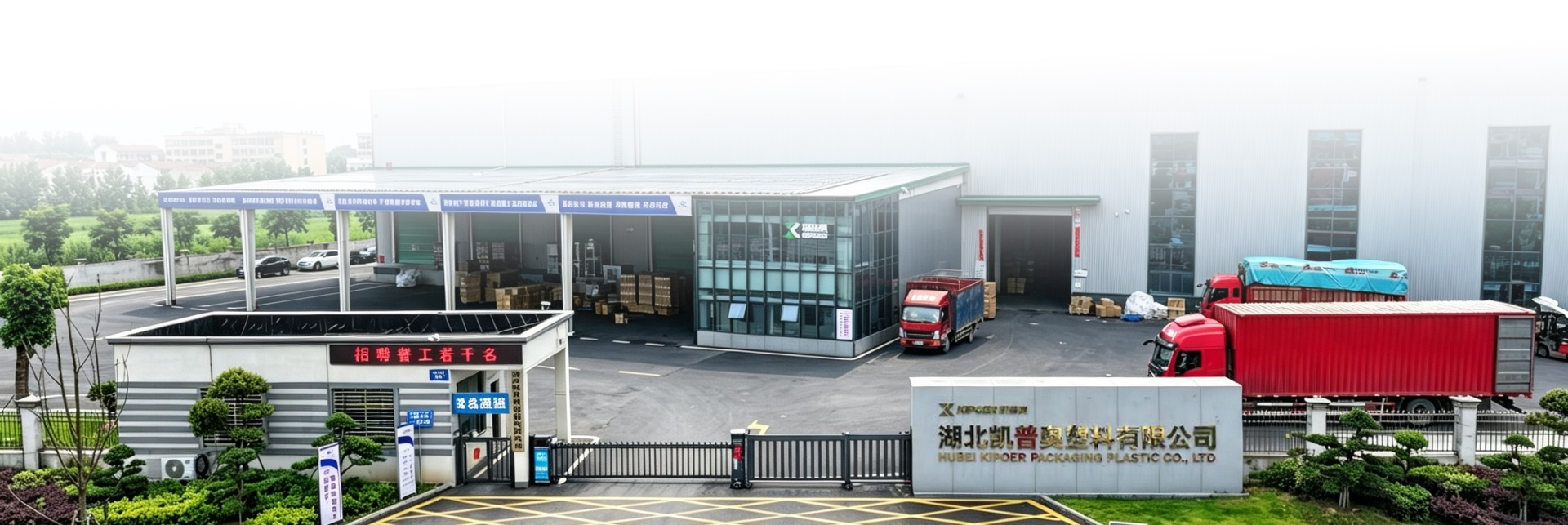






Hubei Kipoer Plastic Packaging Co., Ltd. is a China-based manufacturer of Shallow PET Fruit Tray Manufacturers and food-grade thermoformed packaging. From our production base in Xiaogan, Hubei Province, we extrude PET and PP sheet in-house and form finished trays on 16 fully automatic high-speed vacuum forming lines inside a Class 100,000 food dust-free workshop.
Founded in August 2015 with a total investment of USD 30 million, we supply fresh-cut processors, supermarket packing operations, seafood and bakery producers, and packaging distributors in more than 30 countries. Our shallow tray range is built around one idea: a low sidewall, a flat base and a wide flange that work together with cling film, lidding film or a top-seal closure.
Our Position in the Shallow PET Fruit Tray Category
We are a source manufacturer rather than a converter buying sheet on the open market. Sheet extrusion, mold making, thermoforming, in-line inspection and packing sit inside the same facility, which is what allows us to hold tray geometry, wall thickness and flange flatness together across a long production run.
- 16 fully automatic high-speed vacuum forming lines, with an independent mold processing workshop
- Sheet capacity of 30,000 tons per year; forming capacity above 30,000 tons per year and roughly 2,000 tons per month
- 50,000 m² total workshop area and more than 400 employees
- More than 10 packaging structure R&D engineers and over 50 mold making and quality control technicians
- Own brand, Fresh Fruit Delight, used across our food packaging lines
Where Shallow Trays Fit: Applications and Food Types
A shallow tray presents product rather than containing it. The low edge keeps sliced fruit, cut vegetables, sliced fish and seafood portions visible from the side, while the flat base holds the pieces in a single layer so the cut face stays clean and the colour reads clearly through the PET.
The wide flange is the functional part of the design. Cling film draws down onto the flange and onto the food surface, which limits moisture evaporation and oxidation and helps extend the shelf life of fresh-cut product. The same flange is the sealing surface when the tray runs under a lidding film or top-seal head.
Typical applications: supermarket fresh-cut sections, bulk fresh vegetable counters, individually packed fish and seafood, bakery and pastry presentation, dried fruit and snack portions, and prepared ingredient kits.
Our Tray Range and Application Matching
| Tray format | Typical food applications | Key configuration variables |
|---|---|---|
| Shallow PET fruit tray, clear | Sliced fruit, cut vegetables, single-layer portions | Sheet gauge, cavity depth, flange width, corner radius |
| XGL-2015J gold PET shallow premium tray | Premium fruit presentation, gift and retail displays | Side reinforcement ribs, gold tone, rigidity under load |
| XGL-211625 gold PET shallow tray | Retail fruit packs needing base grip on the shelf | Arch-bottom fill effect, anti-slip base grid |
| Deep plastic fruit tray | Berries, cherry tomatoes, taller stacked fills | Sidewall height, stacking pitch, denesting force |
| Irregular plastic fruit tray | Mixed assortments, shaped and contoured packs | Cavity layout, multi-compartment split, draw ratio |
| Colored PET plastic food tray | Brand-matched retail trays, dark or tinted formats | Masterbatch shade, opacity, surface finish |
All tray formats sit inside our wider PET plastic food tray programme, so a project can move between shallow, deep and compartmented versions without changing material supplier or quality route.
Critical Specifications We Confirm Before Tooling
Shallow trays are dimensionally simple but sensitive to small changes. A 0.5 mm shift in flange flatness or base thickness changes how the film seals and how the tray behaves on a denesting magazine. These are the values we fix with you before a mold is cut.
- Material and gauge: food-grade PET sheet, with thickness selected against fill weight and required rigidity
- Tray geometry: outer length, width and depth, cavity draft angle and corner radius
- Flange: width, flatness and edge finish, matched to cling film, lidding film or top-seal tooling
- Base: flat or arch-bottom, rib pattern, anti-slip grid, drainage or venting detail
- Stacking: nesting pitch, denesting force and stack height per carton
- Optical: clarity and haze level for retail display, or tinted and gold-tone finishes
- Temperature exposure: chilled, cold-chain and ambient distribution conditions
- Compliance: food contact requirements for the destination market
Configuration Options and Customization
Customization is our core business. We build molds from physical samples, product drawings or stated size requirements, and we adjust the forming process to match the appearance and handling behaviour a line needs.
- Appearance and surface finish, including gloss, matte and embossed effects
- Sheet thickness adjustment across the tray, with reinforced sidewalls where rigidity matters
- Colour matching through masterbatch, including gold and premium tones
- Anti-fog treatment for chilled display, and anti-static treatment for automated handling
- Laminating and multi-layer sheet options for barrier or presentation requirements
Line Integration, Denesting and Packing Automation
A shallow tray usually enters the packing hall through a denesting magazine, then passes a filler, a film or lid station, a checkweigher and a labeller. We configure the tray so it releases cleanly from the magazine without double-picks and sits square under the sealing head.
Where a project runs cling film by hand or on a wrapping machine, we set flange width and flatness so the film pulls tight without bridging. Where the line uses top-seal or lidding film, we confirm the sealing window against the tray material and the closure substrate before the first production run.
Quality Assurance and Acceptance Testing
Hygiene and quality management run through the whole process. Incoming raw material is checked for food contact compliance before it enters the warehouse, production takes place in a dust-free controlled environment, and each process step is inspected in line.
- Finished trays are sampled for dimensions, sealing performance, temperature resistance and odour
- In-house laboratory equipment includes temperature resistance test chambers, sealing testers, thickness testers and food material safety testing instruments
- Third-party food contact test reports are issued for the relevant market requirements
- Our quality control system is operated in accordance with ISO standards
Information We Use to Configure Your Solution
| Project input | What it determines |
|---|---|
| Product to be packed, piece size and fill weight | Cavity dimensions, base support, sheet gauge |
| Drawing, sample or target outer dimensions | Mold design and tooling lead time |
| Closure method: cling film, lidding film, top seal or lid | Flange width, flatness and material grade |
| Packing line type and denesting equipment | Nesting pitch, denesting force, stack count |
| Chilled, frozen or ambient distribution | Temperature performance and anti-fog option |
| Destination market and food contact rules | Sheet grade and test report scope |
| Annual volume and peak season profile | Production scheduling and stock holding |
Maintenance, Documentation and Delivery Scope
Molds are maintained in our own workshop, so replacement forming tools and cavity repairs stay under our control. Trays are nested and packed in PE bags inside export cartons, with carton count and stack height agreed against your warehouse and shelf-fill handling.
Orders are supported with material and food contact documentation, packing specifications and pre-production samples for line trials. Our team replies to enquiries within 12 hours on working days, and small-batch trial orders run alongside large long-term programmes with surplus capacity held for peak season scheduling.
Frequently Asked Questions
Can you produce a shallow tray to our own dimensions?
Yes. We build molds from physical samples, product drawings or stated size requirements, and because we extrude our own PET sheet we can match outer dimensions, cavity depth, flange width and sheet gauge as one set of parameters rather than working from a fixed catalogue.
Do you supply gold and coloured shallow trays?
We do. Our range includes gold-tone premium trays such as the XGL-2015J with side reinforcement ribs and the XGL-211625 with an arch-bottom fill effect and anti-slip base grid. Colour is controlled through masterbatch and confirmed on a pre-production sample before the run starts.
How does a shallow tray behave with cling film or lidding film?
The wide flat flange is the sealing surface. With cling film, the film draws down onto the flange and the food surface, which limits moisture evaporation and oxidation. For automated wrapping or top-seal lines we adjust flange width and flatness to suit the closure equipment.
What production capacity is available for shallow tray orders?
We run 16 fully automatic high-speed vacuum forming lines with forming capacity above 30,000 tons per year, roughly 2,000 tons per month, and sheet capacity of 30,000 tons per year. Small-batch trial orders and large long-term programmes are both scheduled, with surplus capacity held for peak season demand.
What quality documentation comes with an order?
Incoming sheet is checked for food contact compliance, production runs in a Class 100,000 dust-free workshop with in-line inspection, and finished trays are sampled for dimensions, sealing, temperature resistance and odour. Third-party food contact test reports are issued from our in-house laboratory equipment.
Can shallow trays be combined with other formats in one programme?
Yes. Shallow trays, deep fruit trays, irregular trays and coloured trays all run through the same material and quality route, so a mixed programme can be scheduled together with consistent sheet grade and documentation.
Related Products and Categories
Our portfolio also includes XGL-2015J Gold PET Shallow Premium Fruit Tray With Side Reinforcement Ribs for applications with different operating ranges, interfaces or integration requirements.