

 English

 Español
  中文简体
中文简体

Content
Tray selection is therefore a specification exercise rather than a shopping decision. Rim geometry, sheet gauge, resin grade, closure type, and lid compatibility all have to line up before a mould is worth cutting.
The sections below cover material choice, format selection, and the checks worth running before you commit to a tool. They are written for packers, retailers, and food processors who need a tray that behaves the same way on pallet 1 as it does on pallet 500.
What a PET Plastic Food Tray Actually Is
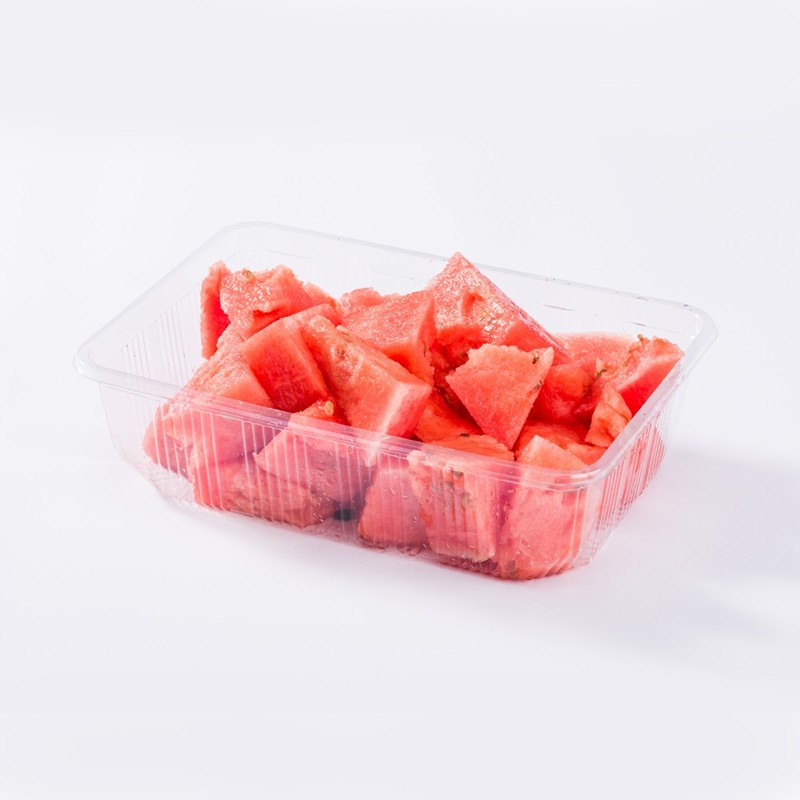
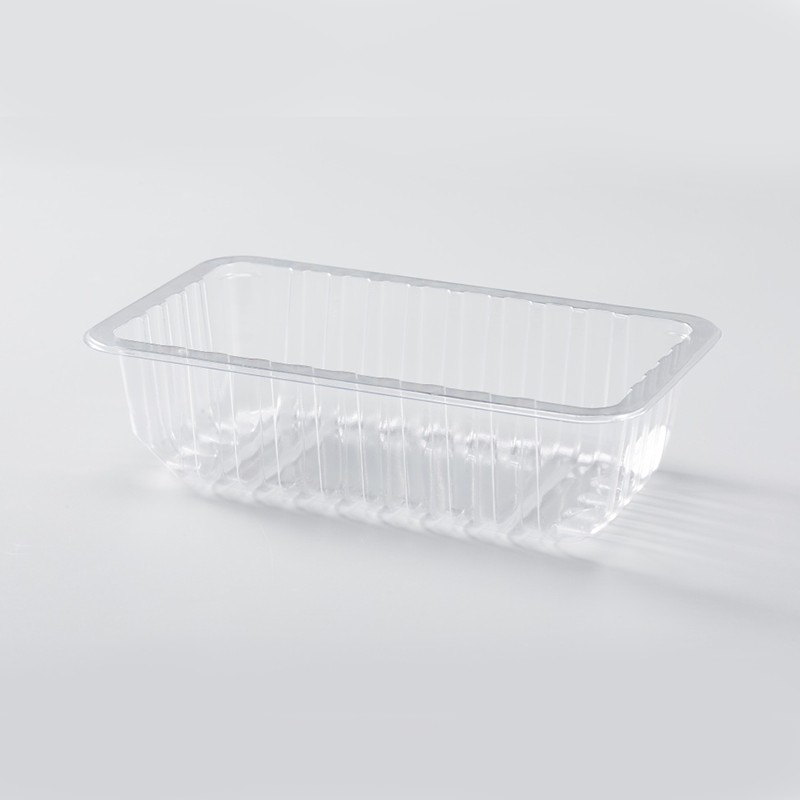
A PET plastic food tray is a rigid food-contact container thermoformed from polyethylene terephthalate sheet, shaped into a defined depth, rim, and base geometry so it can hold, protect, and display fresh food.
PET is the same polymer family used for beverage bottles, so the material already carries a long food-contact history and an established recycling stream under resin identification code 1. Two variants matter commercially. Amorphous PET is glass-clear and covers the majority of retail trays and clamshells. Crystallised PET is opaque and heat-stable enough for ovenable applications.
What separates a food tray from generic packaging comes down to a short list:
- Food-contact compliant resin supported by migration documentation, not a verbal assurance
- Sheet gauge held across the whole web, not only at the thickest point
- A rim designed for the actual closure: snap, hinge, tamper band, or heat-seal flange
- Base geometry that resists bulging when ten trays sit stacked in a carton
- Clarity that survives chilling, condensation, and the retail light box
PET or PP: Matching the Resin to the Food
PET wins on clarity, stiffness per gram, and recyclability for chilled and ambient display, while PP wins wherever the product is hot-filled, frozen hard, or needs a tray that flexes instead of cracking.
PET for cold display
- Crystal clarity that keeps fruit visible at arm's length
- High stiffness per gram, so a thinner tray still holds its shape
- Good moisture and oxygen barrier for short shelf life
- Practical service window of roughly -20 C to 60 C for a filled, stacked tray
- Straightforward to recycle in code 1 streams
PP for heat and hard freeze
- Tolerates hot fill and microwave reheating
- Retains impact strength down to about -25 C
- Translucent rather than clear, so haze becomes a design choice
- More flexible, which means deep draws need extra design attention
- Resin code 5, with a different recycling pathway
Temperature is usually the deciding line. Most specifications treat a filled and stacked amorphous PET tray as comfortable in chilled and ambient conditions, while frozen meat and deli programs tend to run PP bases with a clear PET lid because PP does not embrittle in a blast freezer.
Tray Formats and Where Each One Earns Its Place
Depth and base geometry decide most of a tray's performance, so format selection should follow the load case rather than the product photograph.
| Format | Typical depth | Primary use | Specification to watch |
| Shallow tray | 20-30 mm | Retail fruit, mushrooms, cut vegetables | Base deflection under stacking load |
| Deep tray | 40-70 mm | Large fruit, bakery, deli portions | Side wall reinforcement and nest ratio |
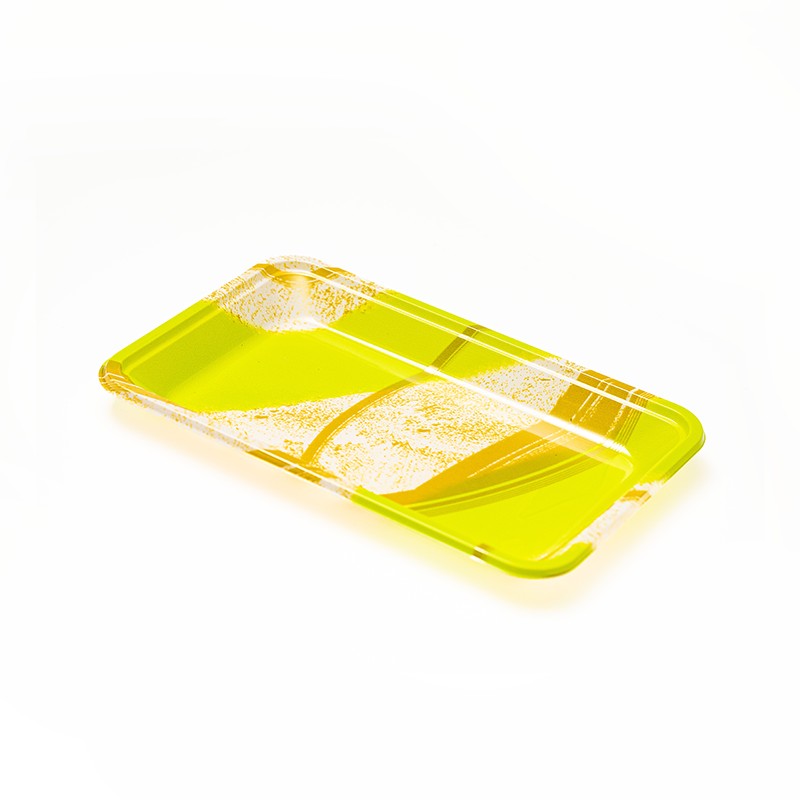
| Coloured tray | 20-60 mm | Branded retail and gift packs | Pigment must be food-contact approved |
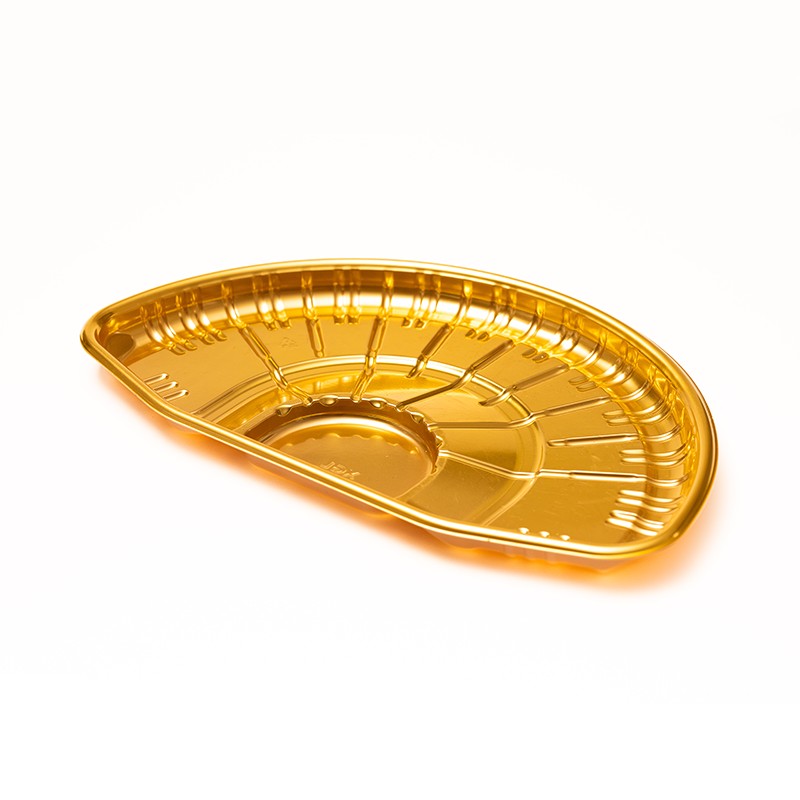
| Irregular or shaped tray | 25-60 mm | Seasonal packs and multi-count gifting | Draw ratio at corners and webbing risk |
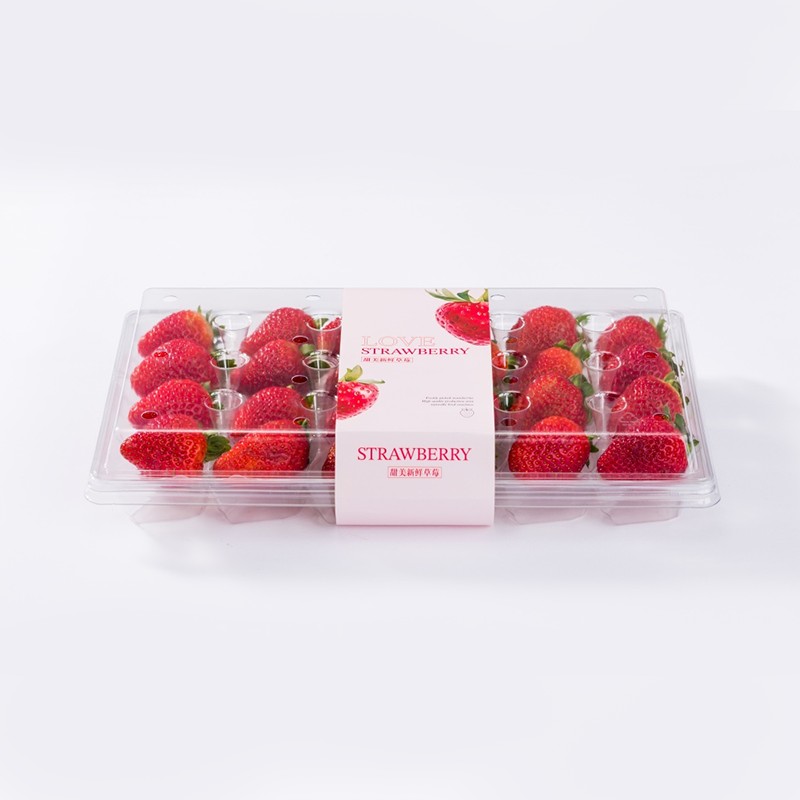
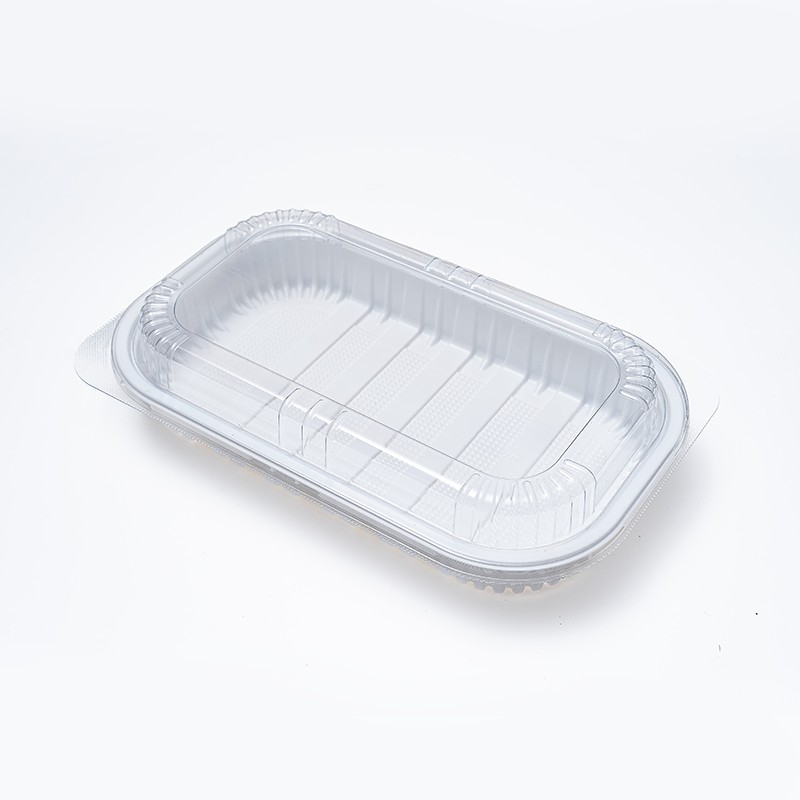
| Tray with lid or clamshell | 30-80 mm | Cherry tomatoes, snack fruit, dried fruit | Hinge cycle life and tamper evidence |
Colour is the second lever once geometry is fixed. A coloured PET tray carries brand identity at retail, but the pigment has to be food-contact approved and it reduces light transmission, which is exactly what makes a clear tray look premium. If the product sells on visible freshness, stay clear and let the label do the branding work.
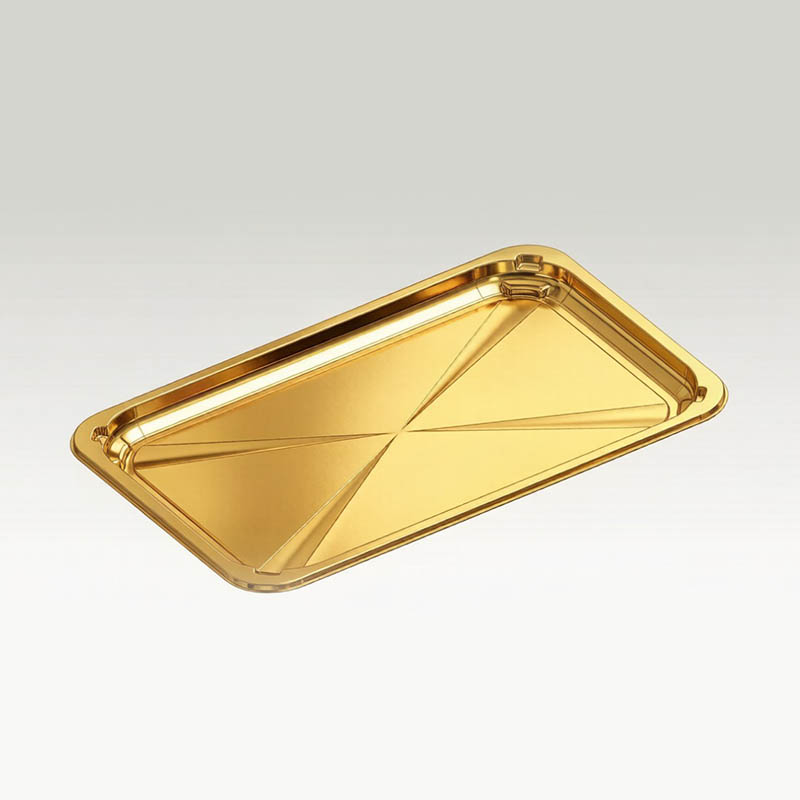 Colored PET Plastic Food Trays for Branded Retail PresentationColored PET food trays offer metallized, matte, and film finishes for branded retail display, with food-contact PET and configurable thickness or rim geometry.View Product →
Where colour is genuinely part of the shelf presence, specify it in the same wall construction you would use for a clear tray. Colour should never be the reason a tray gains or loses two tenths of a millimetre of gauge.
Specifications That Decide Whether a Tray Survives Transit
Wall thickness and base geometry matter more than any other variable, because a tray almost always fails at the base corners and hinge line before the side walls give way.
Gauge alone does not solve deflection. Ribbing, arched bottoms, side wall reinforcement, and generous corner radii all change how a loaded tray behaves. That is why the specification sequence matters more than any single number.
- Define the load case. How many trays per carton, how high the pallet, ambient or chilled, and how long the stacked storage lasts.
- Set the closure first. Hinge, snap, tamper-evident band, or heat-seal flange. Rim geometry follows from that decision, not the other way round.
- Fix the base. Flat bases are the cheapest to tool; ribbed and arched bases carry more load per gram of resin.
- Hold the draw ratio. Deep draws thin the sheet at the corners, and the formed corner is where the first crack appears.
- Validate with a real test. A carton dropped from 800 mm at 4 C tells you more than any datasheet figure.
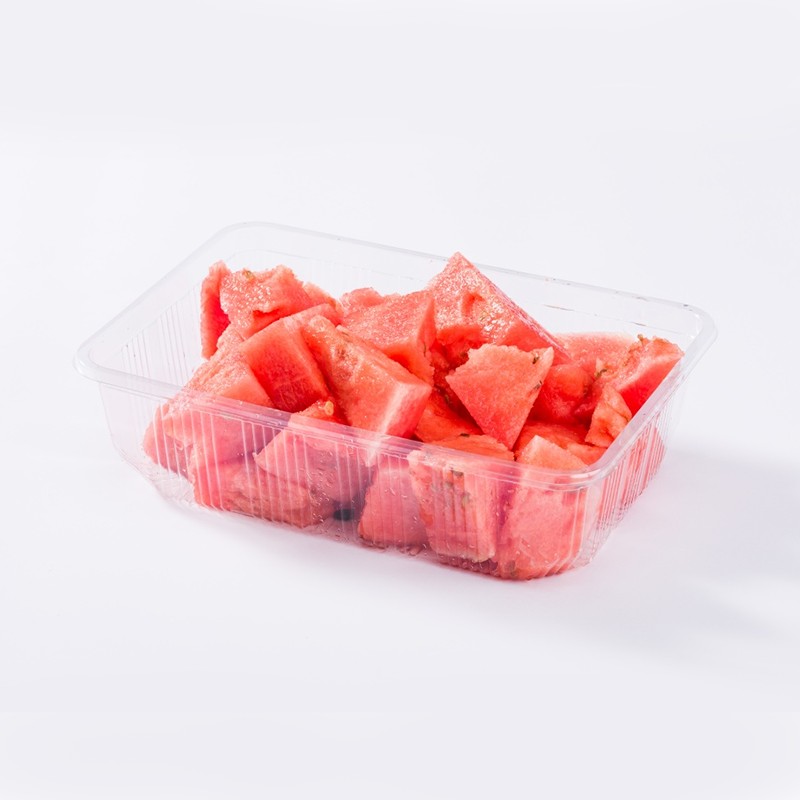 XGL-2817 High-Transparency Deep PET Fruit Tray with Reinforced Side WallsA 290×202×80 mm clear PET tray with reinforced side-wall ribs for stacking strength, suitable for whole fruit, fresh-cut produce, and open or wrapped retail display.View Product →
Sourcing Checks Before You Commit to a Tool
Ask who controls the sheet. A supplier that extrudes and thermoforms in-house can hold gauge across the web, while a supplier that buys sheet and forms it inherits whatever tolerance the sheet mill delivered.
- Which resin grade is used, and what food-contact declarations accompany it?
- Is forming in-line or offline, and what gauge tolerance is guaranteed in writing?
- Who owns the mould, and what is the replacement lead time?
- Is regrind used, at what percentage, and is it kept out of food-contact layers?
- What is the nest ratio, and how many trays fit a standard pallet footprint?
Review the production floor before samples arrive. Hubei Kipoer Plastic Packaging forms PET and PP in-house, and its factory page sets out the forming setup, mould library, and packing standards worth checking against your own specification.
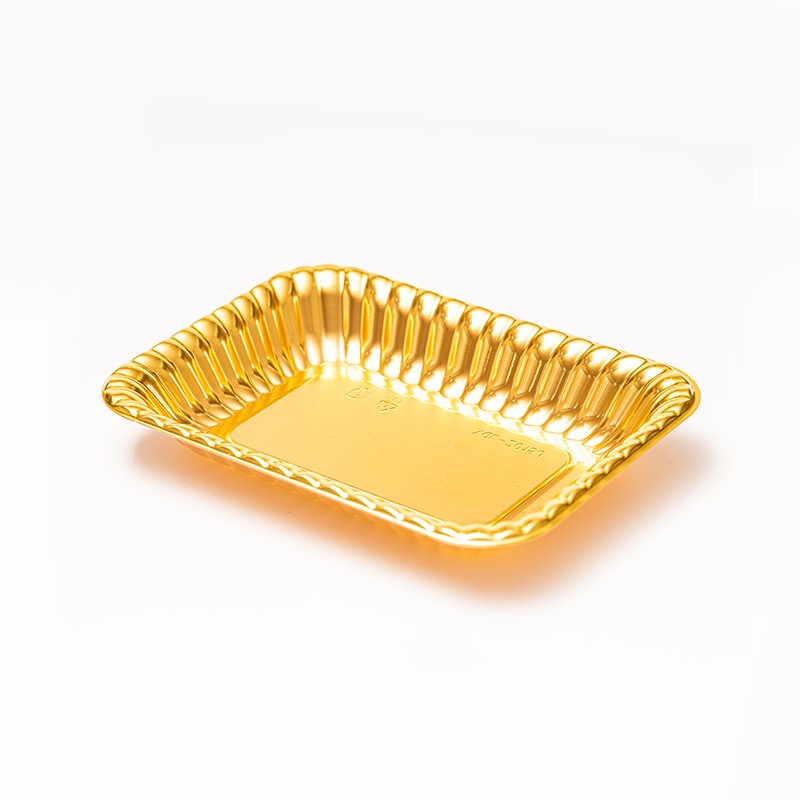 XGL-2015J Gold PET Shallow Premium Fruit Tray with Side RibsA 200×145×25 mm gold PET tray with side reinforcement ribs, bringing stiffness to shallow premium displays for fruit counters and gift packaging.View Product →
Shallow formats are a good example of why reinforcement is worth paying for. A shallow premium tray with side reinforcement shows how much stiffness a low-profile design can carry once the rim and base are engineered rather than scaled down from a deeper tool.
Frequently Asked Questions
What thickness should a PET plastic food tray be?
Most retail trays run between 0.4 mm and 0.6 mm of formed gauge, while deep trays and deli or frozen formats run from 0.6 mm to 1.0 mm. The correct number follows the stacking load and storage duration, not the food category.
Are PET food trays recyclable and microwave safe?
PET carries resin identification code 1 and is widely accepted in rigid plastic recycling streams. Amorphous PET is not intended for microwave or oven use; only crystallised PET is specified for those temperatures.
Can a PET tray be sealed with film instead of a lid?
Yes. Heat-seal trays use PETG or peelable lidding film on a flat flange, typically 8 mm to 12 mm wide, sealed within a defined temperature window. Modified atmosphere packaging combines that seal with a controlled gas mix inside the tray.
How do I request samples or a quotation?
Send the product type, fill weight, target depth, closure type, and pallet configuration. Use the contact page to request a formed sample in the actual production gauge rather than a generic swatch.