

 English

 Español
 中文简体

Content
A blueberry clamshell is usually specified in one meeting and then lives on the packing line for years. The two numbers that cause the most trouble are the vent opening and the wall gauge, and they are often signed off by two different people who never compare notes.
A 125 g punnet packed at 25 °C, cooled to 2 °C and stacked eight cases high on a pallet is doing four jobs at once. Choose the vent pattern for a different climate and the centre of the pallet stays warm a day longer than the edges. Choose the gauge by feel and the bottom layer reaches the store with crushed shoulders and juice on the film.
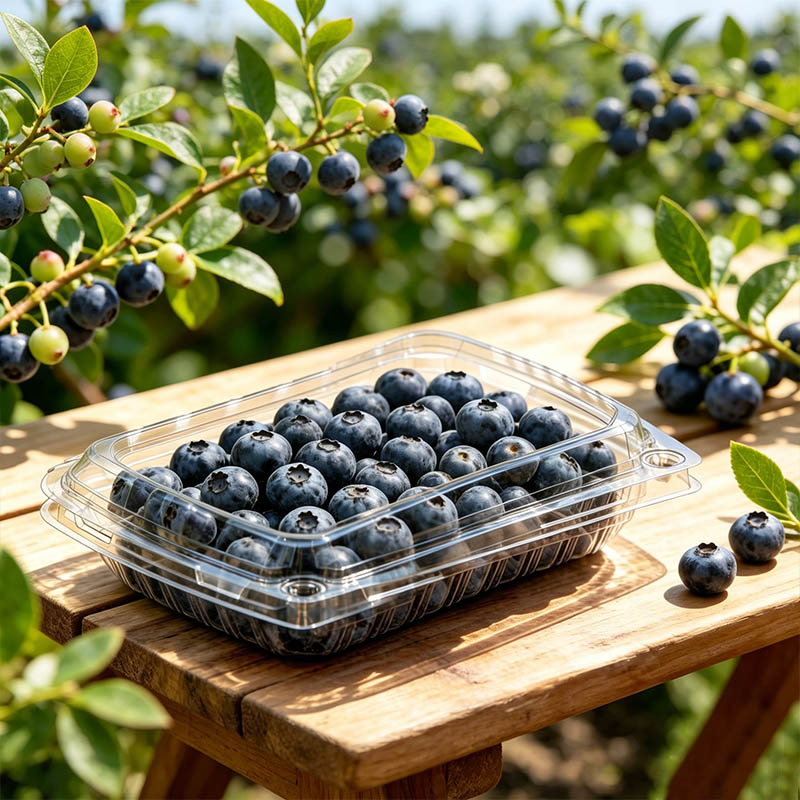
A PET blueberry clamshell is a one-piece thermoformed container made from food-grade polyethylene terephthalate sheet, closed with an integral hinge and lock, and perforated with vents sized to move chilled air through the punnet without letting berries escape.
What follows is the order in which these decisions bite: venting, gauge, hinge memory, then fill weight and case packing.
Four Jobs a Blueberry Clamshell Does at Once
A blueberry clamshell has to cool, protect, stay closed and sell the fruit, and each job pulls the specification in a different direction.
- Cooling. Open area at the shoulder and base lets forced air pass through the stack instead of around it.
- Stack strength. The base and the lid shoulder carry the load, so gauge matters most at the bottom of the punnet, not at the lid.
- Closure. A lock that survives 0-4 °C without popping when the case is compressed on the pallet.
- Presentation. Clarity and anti-fog behaviour decide how the fruit reads under retail lighting.
The four pull against each other. Every square millimetre of vent is a square millimetre that no longer carries load, and every extra tenth of a millimetre of sheet is resin the buyer pays for on every case.
Free vent area is the first thing traded away to gain stack strength, and it is the change most likely to show up as soft fruit three days later.
Vent Pattern and Cooling Decide Whether the Berries Arrive Firm
Vent openings should be sized to the cooling method and the berry diameter, not copied from last season's specification sheet.
A forced-air tunnel moves cold air through the stack, so holes at the shoulder and base do more work than holes in the lid. Room cooling is the opposite: air drifts, the pallet centre lags, and a closed lid with a few micro-perforations will hold humidity without removing field heat.
| Vent style | Cooling method | What it does well | Watch out for |
| Round holes, 4-6 mm, shoulder and base | Forced-air tunnel | Fast, even pull-down through the stack | Small or soft berries escape at the base |
| Slots, 8-10 mm, lid and base | Room cooling, short trips | Simple tool, strong airflow | The pallet centre cools a day late |
| Unvented with a liner | Modified atmosphere | Holds humidity, limits weight loss | Condensation pools and mould follows |
| Micro-perforations | Retail display | Very low moisture loss | Holes clog with dust and are hard to audit |
The check that catches most mistakes is simple: measure the free area, then measure the smallest berry in a sample of a hundred. If a berry can pass a base vent, the punnet will leak fruit onto the case below.
Vents in the lid look generous on a drawing and do very little in a tunnel, because the air is already moving past the lid face.
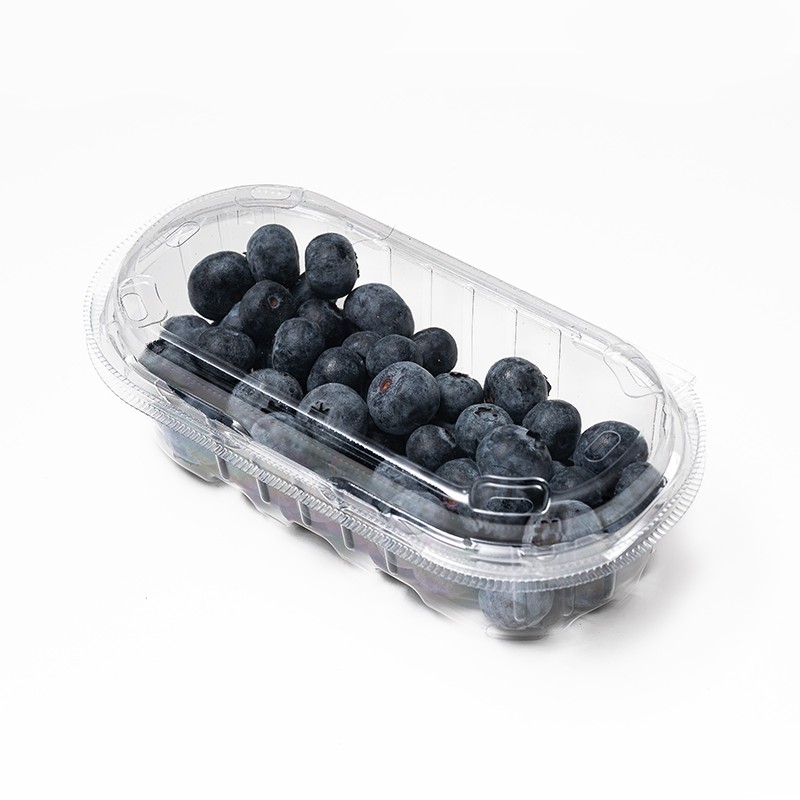
A vented clamshell built for tunnel cooling puts the open area where the air actually travels rather than where it photographs well.
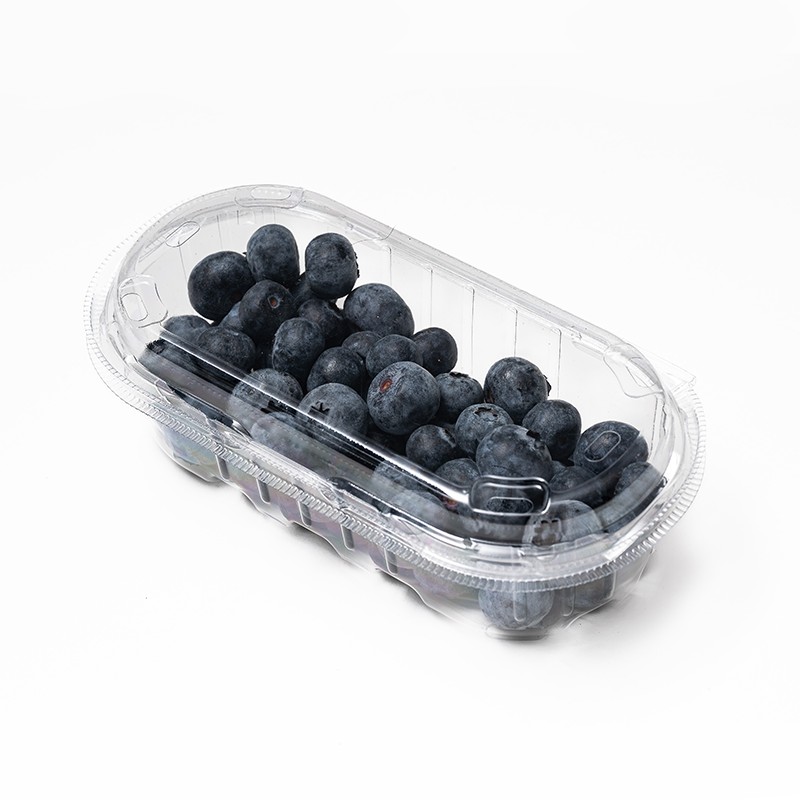 XGL-200 PET Blueberry Ventilated Clamshell ContainerFor tunnel-cooled blueberry packs, this transparent PET clamshell has distributed ventilation holes and a four-corner stacking groove; check its 175 × 90 × 50 mm dimensions and 17 g weight.View Product →
Wall Gauge, Flange Width and Hinge Memory
Wall gauge should be set by stack height, case depth and the temperature the pallet will see, not by the thickness of the sheet the tool was cut for.
Gauge is usually quoted as sheet thickness, but what the retailer actually sees is the flange. A flange of 8-12 mm spreads the load from the punnet above across a wider ring, and it does more for a stack than adding 0.1 mm to the walls.
Thinner wall, 0.5-0.6 mm
Lower resin cost and a faster cycle. Fine for single-layer display and short trips, weak once the case is over-filled or the pallet goes eight high.
Thicker wall, 0.7-0.8 mm
Carries the stack and holds shape at 2 °C. Costs more resin, needs longer in the mould, and can hide a hinge that was designed too thin.
Hinge memory is the number buyers forget. A hinge that has been flexed cold a few hundred times, or stored flat in a hot container, will not stand the lid up on the shelf.
Ask for a hinge test at 2 °C rather than at room temperature, and measure how much the lid sags after 24 hours in a chiller. The buyer's guide to PET clamshell gauge sets out the same checks in more detail.
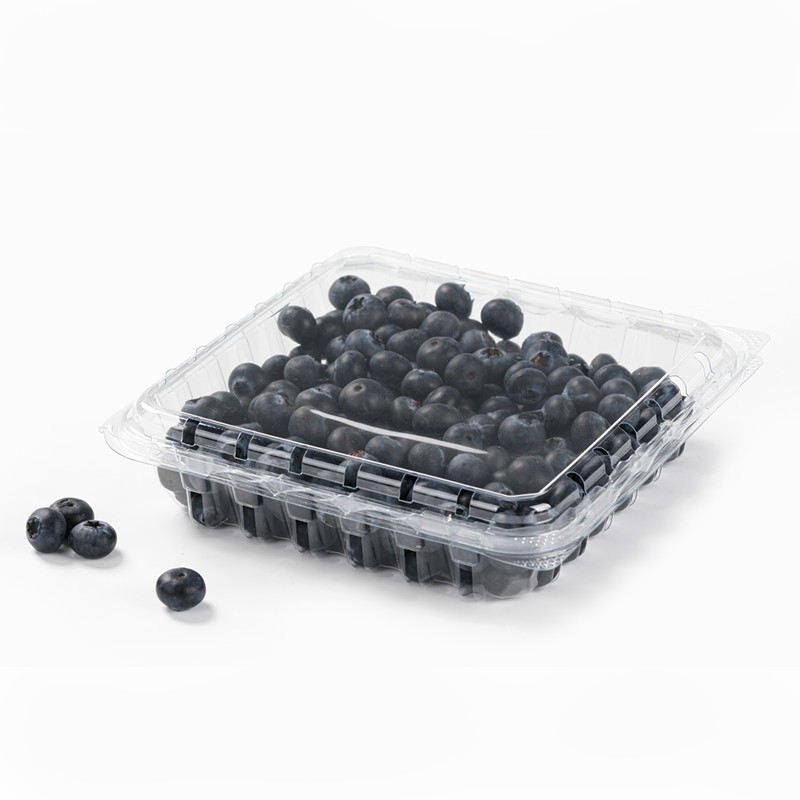
Lightweight clamshells with a nail-lock closure sit in the same family and often suit buyers who need stack performance without the resin cost of a heavy wall.
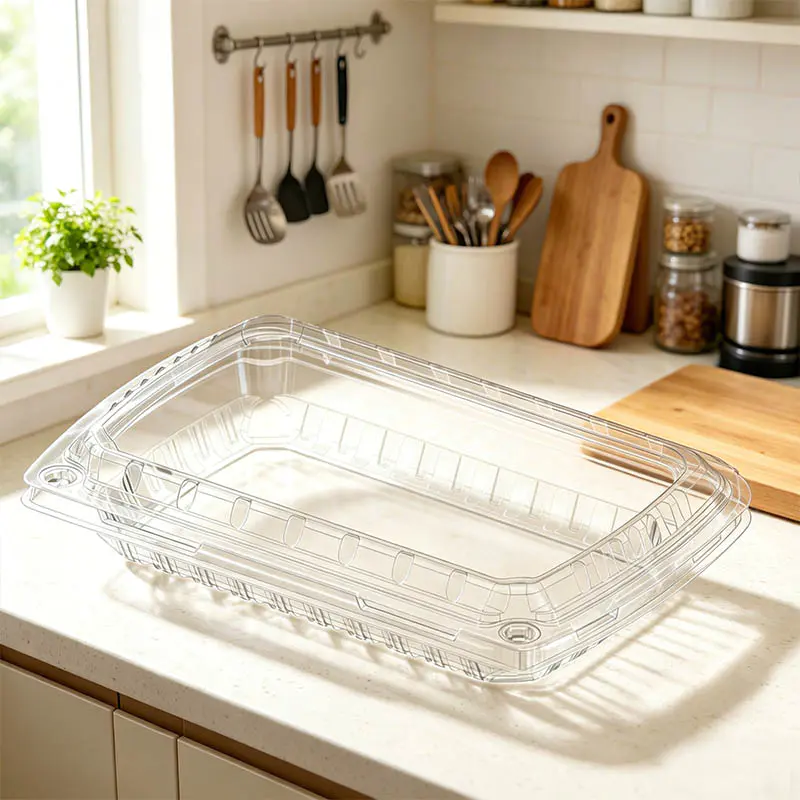 XGL-X06 PET Nail-Lock Blueberry Clamshell ContainerA lightweight 22 g PET clamshell with nail-lock closure and ventilation holes for small fruit; its 181 × 125 × 38 mm footprint suits stack and case-count planning.View Product →
Fill Weight, Case Packing and the Numbers Behind a Pallet
Fill weight and case count decide the clamshell footprint before any aesthetic choice does.
Retailers buy by net weight and count, so the container is usually reverse-engineered: fix the fill weight, then the punnet volume, then the case count that lands on a standard pallet without overhanging the deck.
| Market | Typical fill | Format |
| Snack and convenience | 125 g / 4.4 oz | Single square clamshell, vented lid |
| Standard retail | 170 g / 6 oz | Rectangular hinged clamshell, vented base |
| Family and club store | 300-500 g | Large square or deep rectangular clamshell |
| Foodservice and bakery | 1-2 kg | Shallow tray with lid or crate liner |
Before a tool is cut, run these five checks against real fruit from the packing line rather than against a sample from the lab.
- Measure the smallest and largest berry, then confirm no base vent passes the smallest one.
- Confirm the cooling method at the packer and match the vent pattern to it, not to the previous supplier's drawing.
- Stack a full case eight high at 2 °C for 48 hours and inspect the bottom layer for shoulder crush.
- Open and close the lock three times cold, then compress the case and watch for pop-open.
- Confirm case count, pallet pattern and pallet height, because 2 mm of extra punnet height can drop a whole layer.
Two millimetres of extra height does not change how a punnet looks, but across a pallet pattern it can cost a full layer of freight.
Frequently Asked Questions
What vent size should a PET blueberry clamshell have?
For forced-air cooling, round vents of 4-6 mm at the shoulder and base are the usual starting point. The vents need to be larger than the smallest berry you pack and small enough that the punnet still carries load.
Is a thicker wall always safer?
No. A thicker wall adds resin cost and mould cycle time, and it does not fix a weak flange or a hinge that was designed too thin. Stack performance comes from the flange, the base geometry and the case pattern as much as from gauge.
Can a PET clamshell be recycled?
PET is one of the more widely recycled food packaging polymers and clamshells usually carry resin code 1. Actual acceptance depends on the sorting facility that serves your market, so confirm it before a recyclability claim goes on the pack.
How do I test hinge memory before ordering?
Open and close a sample ten times at 2 °C, then leave it lid-up on a shelf for 24 hours. A hinge that creeps or cracks at that temperature will fail in a retail chiller, whatever the drawing says.
Kipoer has been thermoforming food-grade PET and PP packaging since 2015, and the clamshell range covers vented retail punnets, light nail-lock closures and tamper-evident formats. Send your fill weight, cooling method and case count to the team through the contact page and ask for samples cut to those numbers.