

 English

 Español
 中文简体

Content
- 1 What a Deep Plastic Fruit Tray Changes for Produce
- 2 Depth, Gauge and Material: The Three Specs That Decide Performance
- 3 Deep Tray, Shallow Tray or Clamshell: Which Format Fits
- 4 Matching Tray Depth to Fruit Type and Sales Channel
- 5 Sourcing Checks Before You Approve a Sample
- 6 Color, Clarity and Presentation Details Buyers Notice
- 7 Frequently Asked Questions
Sixty millimeters of wall height looks generous on a spec sheet, until a pallet of stacked trays reaches the cold room with juice pooling in the base ribs. Depth is the first number buyers fix and the one most often revised after the first sample run, because it decides how much load is carried by the base, how much by the side wall, and whether the pack survives four tiers in a chilled truck. The notes below cover the decisions that matter: depth bands, sheet gauge, PET versus PP versus PETG, format choice, and the checks worth running before a production order is signed.
What a Deep Plastic Fruit Tray Changes for Produce
A deep plastic fruit tray is a food-grade container whose side walls are tall enough, usually 40 mm to 80 mm, to hold fruit off the base and keep a filled pack rigid when it is stacked.
Depth buys three things at once. It adds a cushioning gap so fruit does not sit in its own juice, it raises the wall above the fruit line so a lid or film can close the pack without pressing on the produce, and it creates vertical surface for labels and branding. The cost is density: every extra 10 mm of wall reduces the number of trays per carton and per pallet, which shows up later as freight cost per kilo.
In practice the depth decision is made once per fruit and per sales channel, then locked to a tool. Changing it later means a new mold, so it is worth settling at sample stage rather than after the first production batch.
Depth, Gauge and Material: The Three Specs That Decide Performance
Depth sets capacity, sheet gauge sets rigidity, and material sets clarity and temperature range; when a deep tray fails in the field, it is almost always one of these three.
Depth bands and what they carry
| Depth band | Material fit | Typical produce | Risk it controls |
| 40 to 50 mm | PET | Blueberries, raspberries, cherry tomatoes | Base bowing under four-tier stacking |
| 55 to 65 mm | PET with reinforced side walls | Grapes, figs, stone fruit, mixed berry packs | Wall buckling and bruising at the pack edge |
| 70 to 80 mm | PET, or PP where cold handling dominates | Mushrooms, bulk berries, display volumes | Crush in the lower layer of deep fills |
| Deep with sealing flange | PETG | Fresh-cut fruit under modified atmosphere | Leaking seals from an uneven flange |
The grid is a starting point, not a rule. A 65 mm tray in 0.6 mm PET behaves differently from a 65 mm tray in 0.9 mm PET, and that difference is exactly what a warehouse team feels when it unloads a pallet.
Gauge and structural reinforcement
Thicker sheet helps, but geometry does most of the work. The features that keep a deep tray stiff under load are consistent across formats:
- Reinforced side walls that carry compression instead of pushing it into the base
- Corner ribs and radiused edges that stop the wall from buckling inward
- A slightly chamfered or ribbed base that resists bowing when filled
- A flat stacking lip so trays locate on each other instead of sliding
- An anti-slip base pattern where trays are hand-stacked for display
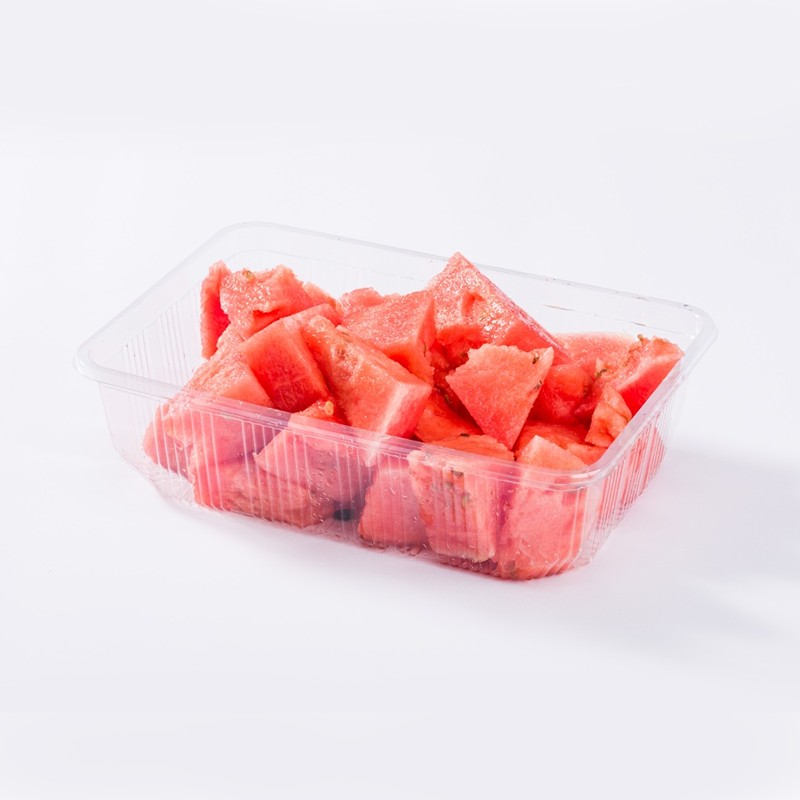
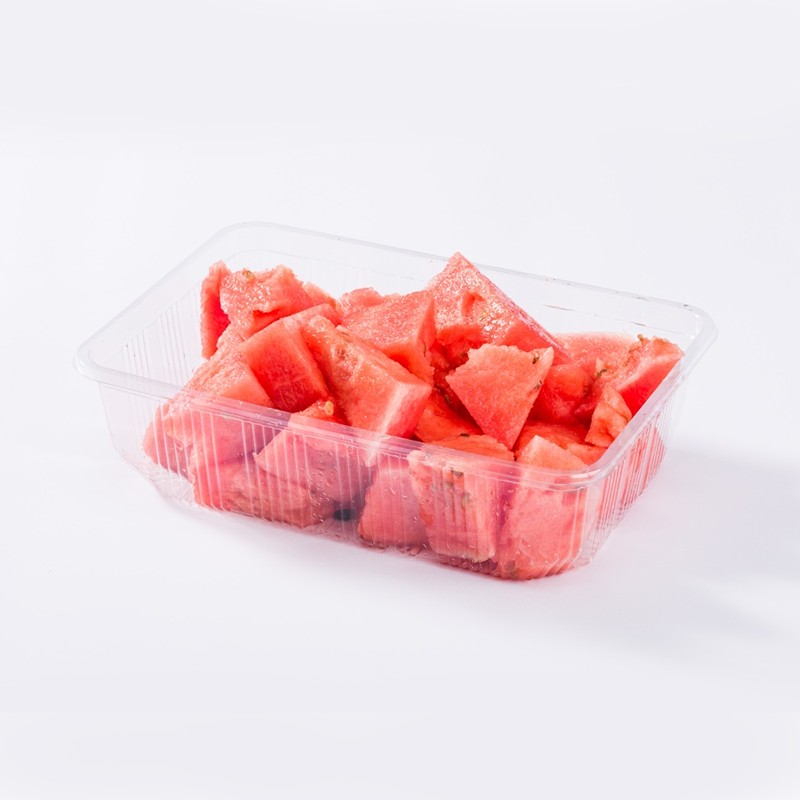 XGL-2817 High-Transparency Deep PET Fruit TrayThis 31 g, 290×202×80 mm transparent PET tray uses reinforced side-wall ribs for deep-tray rigidity and suits whole fruits and fresh-cut produce.View Product →
Material selection: PET, PP and PETG
- PET gives the highest clarity and good stiffness, which is why most transparent deep fruit trays are PET.
- PP stays tougher at low temperature and resists cracking where PET turns brittle, at the cost of a softer, less glassy finish.
- PETG is chosen when the pack needs a heat-sealed flange and a modified atmosphere rather than a lid.
For a fuller comparison of formats, wall options and inspection points, the site's PET plastic food tray guide covers the specification side in more detail.
Deep Tray, Shallow Tray or Clamshell: Which Format Fits
Deep trays suit volume packs and display, shallow trays suit single-layer retail presentation, and clamshells suit sealed single-portion sale.
Choose a deep tray when
- The pack carries 400 g or more of fruit and will be stacked
- The fruit is soft enough to mark under its own weight
- The display needs height, color and a visible fruit face
- A lid or film must clear the fruit without touching it
Choose a shallow tray when
- Single-layer presentation matters more than volume
- Overwrap film is used and the fruit must sit below the rim
- Carton cube, not protection, is the dominant cost
- The pack goes straight to a counter rather than a shelf
Where clamshells still win
A clamshell closes the pack in one piece and removes the separate lid from the line. Vented berry clamshells handle respiration well, while tamper-evident versions suit retail where a sealed edge matters. The trade-off is that depth is fixed by the hinge and the base, so a clamshell offers less freedom to tune wall height than a two-piece tray.
Matching Tray Depth to Fruit Type and Sales Channel
Soft fruit needs depth for cushioning, small berries need ventilation more than depth, and prepared fruit needs a sealed deep format.
- Berries and cherry tomatoes. A 40 to 50 mm wall with vent slots keeps airflow moving and stops condensation sitting against the fruit.
- Grapes, figs and stone fruit. Move up to 55 to 65 mm and specify reinforced walls, since heavier fruit transfers load straight to the side wall.
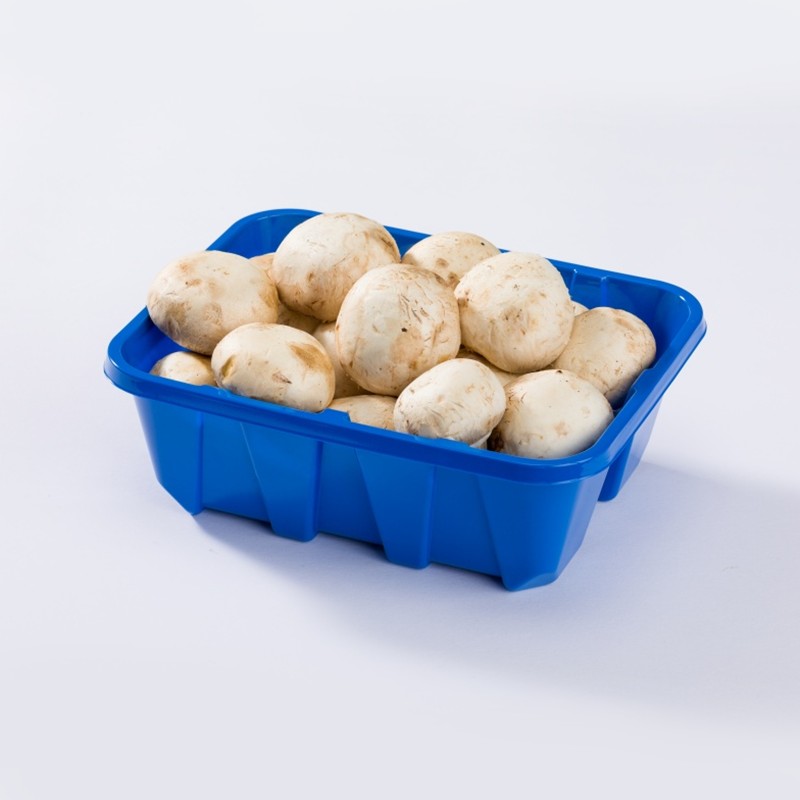
- Mushrooms and bulk display. Deep trays with a tinted wall are used where volume is displayed loose, because the darker surround lifts the produce visually.
- Fresh-cut and fruit salads. Deep trays with matching lids, often in three or four compartments, separate components so juice and yogurt do not migrate.
- Gift and holiday packs. Shaped deep formats, from heart to fan profiles, carry a price premium and usually justify a dedicated tool.
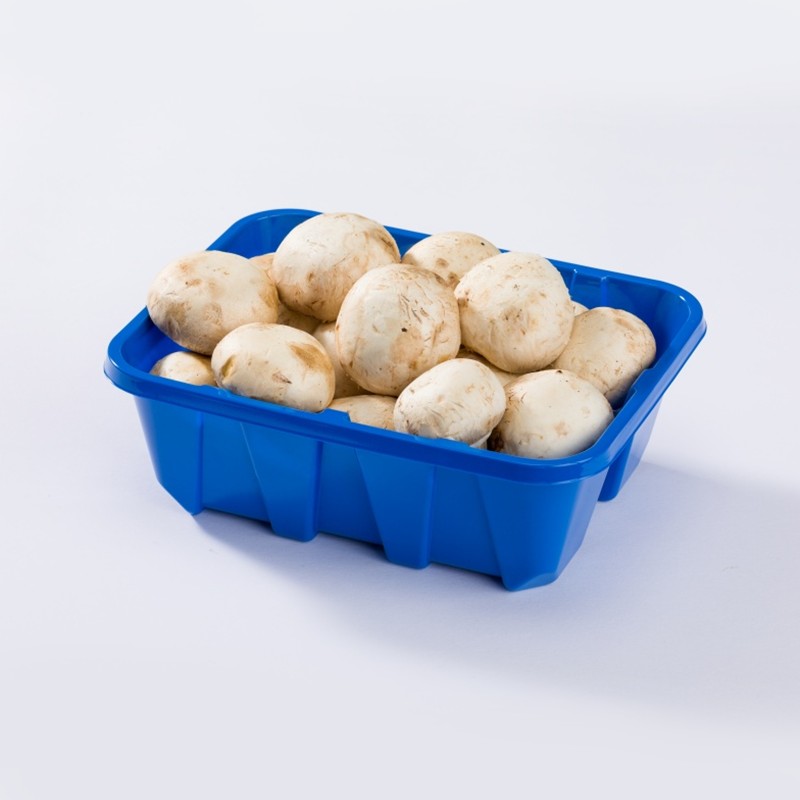 XGL-460G Blue PET Deep Mushroom Display TrayA 21 g, 189×147×65 mm blue PET tray with reinforced ribs and stackable square form, giving pale mushrooms contrast and compression protection in retail displays.View Product →
Where a single fruit ships through more than one channel, pick the deepest format that still fits the shelf and let the shallower channels use the same tool with a different fill weight. One tool across two channels is usually cheaper than two tools that each fit perfectly.
Sourcing Checks Before You Approve a Sample
Five checks catch most deep tray problems before they reach a production run.
- Measure wall height at four points. Read ten trays from the sample box. A spread beyond about 0.5 mm shows up later as rocking packs and unstable pallets.
- Run a load test at chilled temperature. Fill to the declared weight, stack to the planned height, hold at 4 C for 24 hours, then measure base deflection. Room-temperature results flatter every tray.
- Check nesting and release. Trays that bind when nested cost seconds on every line. Lift a stack of twenty and feel whether they separate cleanly.
- Inspect clarity and color under store lighting. Office lighting hides yellowing and flow lines that daylight exposes.
- Verify flange flatness if the tray will be heat-sealed. A wavy flange leaks gas and fails seals no matter how good the film is.
What to send with a quotation request
- External length, width and wall height in millimeters
- Target fill weight and stacking height in the carton
- Closure type: lid, film, heat seal or none
- Temperature range from packing line to retail case
- Annual volume and any seasonal peak
That set is enough to match an existing deep tray tool or to flag where a new mold is genuinely needed. Send the specification through the contact page and the team can compare it against current cavity sizes before quoting.
Color, Clarity and Presentation Details Buyers Notice
Clarity and color change how fruit reads on the shelf more than most specification sheets admit.
High transparency lets the fruit do the selling, which is why berry and fresh-cut packs stay clear. Tinted walls work the other way: a gold or warm-toned tray shifts a standard pack into gifting territory, while a blue or dark tint gives mushrooms and bulk produce a contrast background that makes pale fruit stand out. Wall thickness affects this too, because a heavier gauge can dull the edge of the pack unless the mold is polished well.
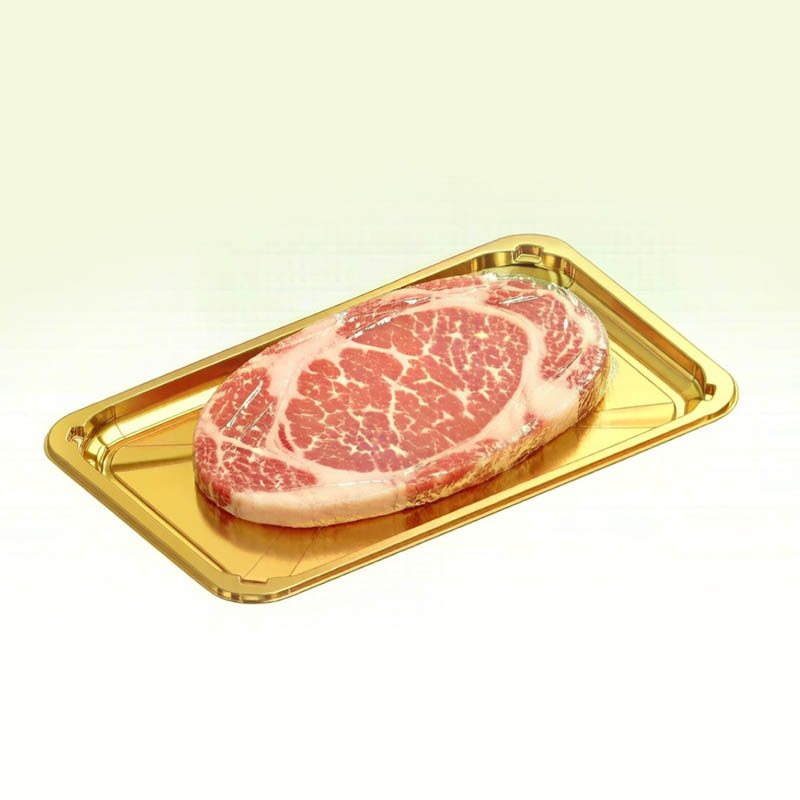 K-2618H13 Gold PET Rectangular Premium Meat TrayThis 29 g, 258×174×13 mm gold PET tray has an X-shaped reinforced base for vacuum skin packaging and is positioned for premium meat presentation.View Product →
Two practical details follow. First, scratches show far more on clear high-gloss PET than on a matte or tinted wall, so handling and interleaving matter on the packing line. Second, labels adhere differently to polished PET than to PP, and a label that lifts in a chilled case undoes a good tray specification in one shift.
Frequently Asked Questions
What depth makes a plastic fruit tray deep?
There is no formal threshold, but the trade generally treats anything above about 40 mm as a deep tray. Retail deep trays usually sit between 50 mm and 70 mm, and display formats for mushrooms or bulk berries can reach 80 mm.
Is PET or PP better for a deep fruit tray?
PET gives the best clarity and stiffness for chilled retail display, which is why most transparent deep fruit trays are PET. PP is the better choice when the pack will be frozen or handled roughly at low temperature, because it stays tough where PET becomes brittle.
Can filled deep trays be stacked?
Yes, but only within a tested limit. Stacking performance depends on gauge, side-wall reinforcement and temperature. Ask for a load test at the chilled temperature the pack will actually travel in rather than accepting a room-temperature figure.
Do deep trays need ventilation?
Berries and other respiring fruit usually benefit from vent slots so condensation does not build against the skin. Fresh-cut fruit and any heat-sealed pack are normally closed, because modified atmosphere is doing the preservation work instead.